Veterinarians have a name for what brings these cases in: high-rise syndrome, the injuries an animal sustains falling from two stories or more. Before you decide a balcony screen for pets is overkill, the research is worth knowing.
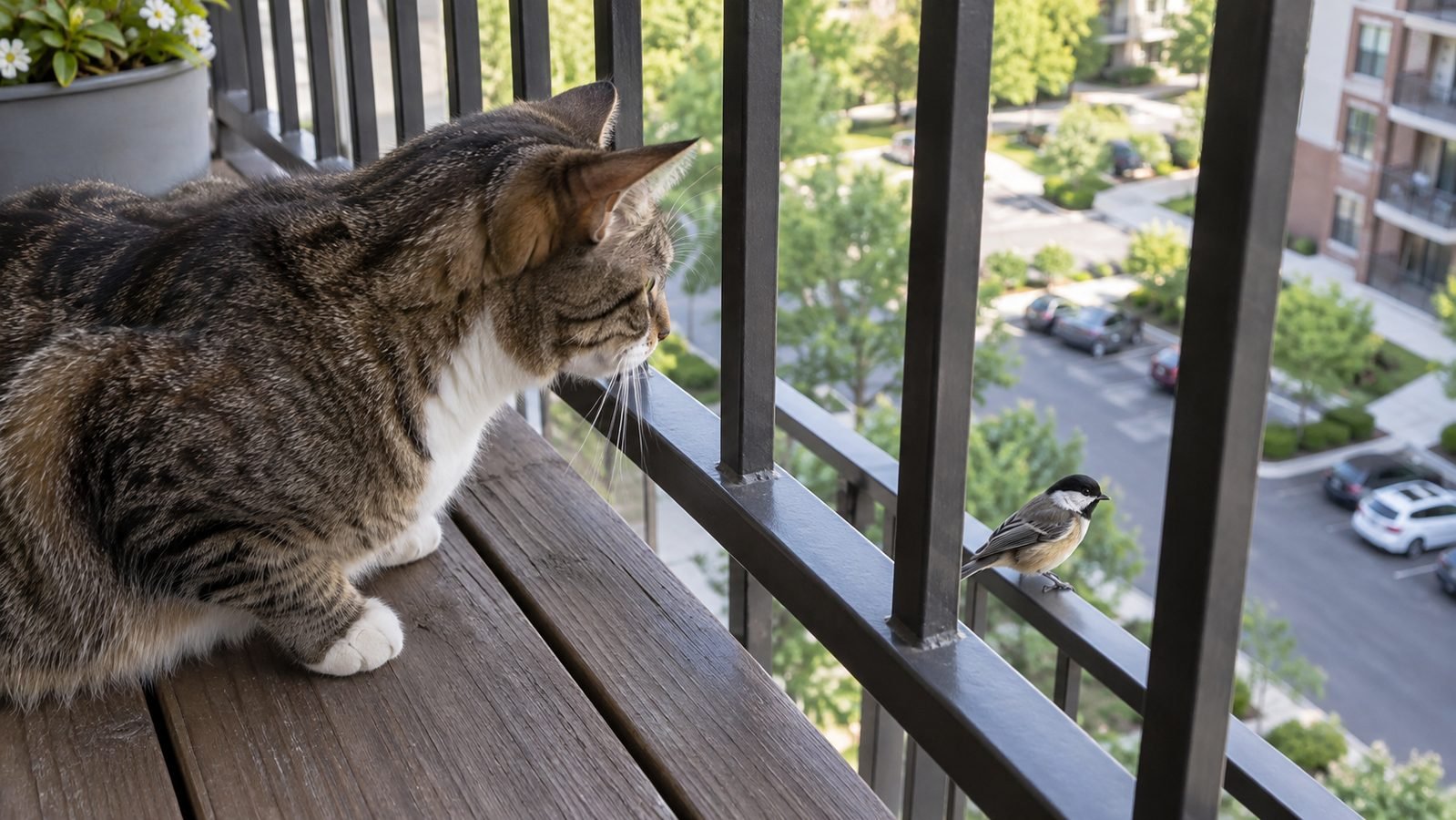
Whitney and Mehlhaff documented 132 cases in one five-month period and found ninety percent had chest trauma, two-thirds with lung contusions. A later review of 1,125 cases treated in Berlin put survival at eighty-seven percent, with injuries more severe as the height increased. Roughly half of those cats had limb fractures, and half had facial injuries. Cats do turn to land feet first, but that does not prevent this damage.
The same studies record what triggers the fall: chasing an insect or a bird, or simply slipping at the rail. Cat balcony netting or a rigid screen prevents both. What follows covers which barrier to choose, and how to install one without damaging the structure under it. On rental property in California the elements you would be attaching to are already subject to periodic evaluation under SB 721, and a pet installation can become a reportable finding.
Why the Guard You Already Have Does Not Work
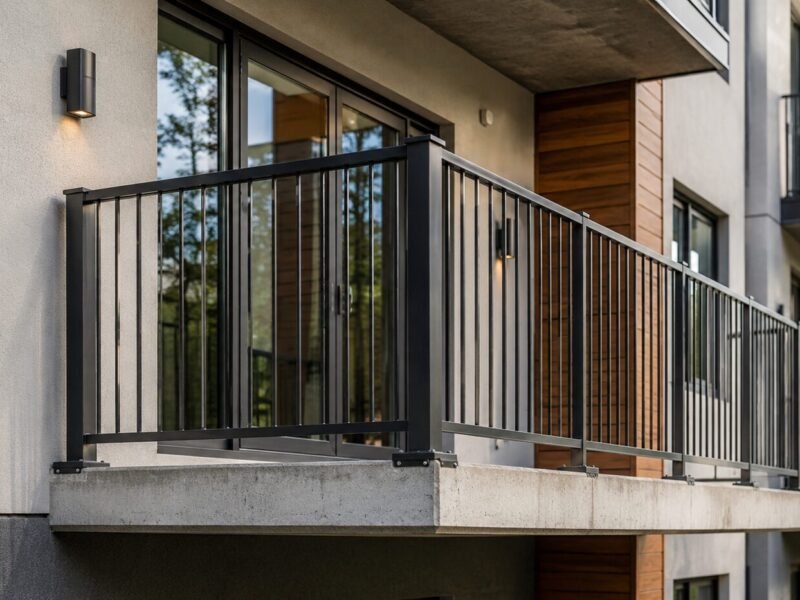
Your railing was engineered against one scenario – an adult going over the edge. Title 24 sets guards at forty-two inches with no opening passing a four-inch sphere, a dimension that approximates a small child’s head. It was never meant to stop an animal.
A cat has a free-floating clavicle, unattached to the rest of the skeleton, so it follows its head through any gap the head clears. An adult cat’s skull is usually narrower than three inches, so a code-compliant opening lets it through. Height does not help either: forty-two inches is one jump for a cat, not an obstacle, and cat balcony safety begins with accepting that the existing structure contributes almost nothing. Measure before you assume otherwise: the only reliable test is the animal’s own head, not a glance along the run.
This is why cat proofing a balcony is an addition rather than an adjustment. The guard cannot be adjusted for this – a second system has to go in front of it, mounted without creating a different hazard.
How Dogs Get Past a Barrier
Weight changes the failure mode, and dog proofing balcony space is a different task. Dogs rarely slip through; they push, lean, dig, and chew. A barrier that closes gaps against a cat may still be shoved aside by a forty-pound dog chasing a squirrel.
Three weaknesses matter for balcony dog safety. The bottom edge, where a dog noses underneath and widens the opening with each attempt. The fastening, since shoving loads clips and ties in a direction they were never rated for. And the material, because a dog that chews gets through soft mesh within a week.
Also measure the gap beneath the bottom rail. On many structures it is wider than the openings above, invisible from standing height, and the first place a determined animal goes.
Heat, Shade, and Water in a Valley Summer
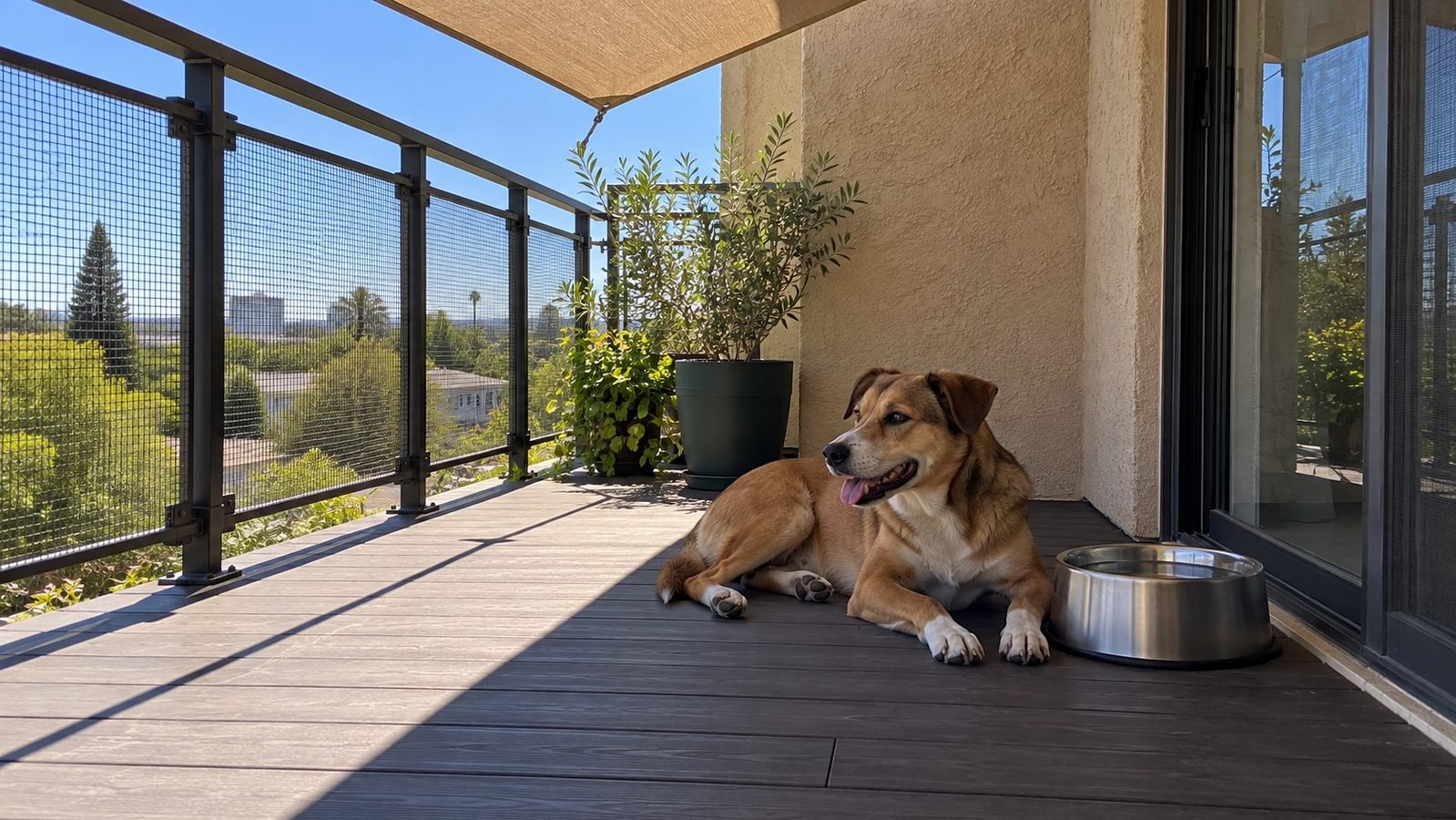
Keeping an animal in is only half of safety. Balcony cat enclosures with no shade are worse for the animal inside than an open space, and that matters more here than in most of the country.
Dark decking and metal railings in direct Sacramento sun run far hotter than the air, and paw pads burn at temperatures a person in shoes never notices. The test takes seven seconds: press the back of your hand flat on the surface and hold it. If you cannot keep it there that long, the surface is too hot for paws.
Shade matters for the same reason, and balcony covers for dogs sold as sun protection are worth more than most containment hardware on a west-facing space. Add water that cannot tip, and remember that an enclosure reduces airflow. On the worst afternoons, bring them inside.
Never Drill the Floor
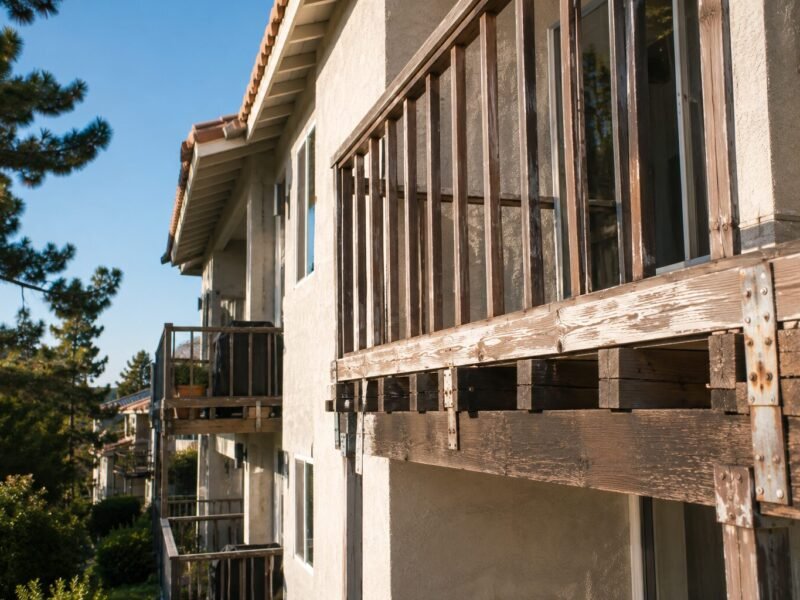
This part costs money, and it is why an inspection company writes about pet fencing. The walking surface of an elevated platform is a waterproofing system, not just a floor. Every fastener driven into it is a hole through that membrane, placed exactly where water collects. Water reaches the framing beneath, which is enclosed, unventilated, and invisible until the wood softens years later. Decay traced to screw penetrations is among the most common structural findings on multifamily property in California, and a pet barrier anchored through the deck creates exactly that.
A balcony fence for dogs fixed with deck screws keeps a dog in for a season and lets water into the framing for years. Post bases, planter anchors, and corner brackets do the same thing, and none of them show it from above. If the instructions call for screwing into the floor, the system is wrong for an elevated structure.
What You Can Attach To
Not every surface is off limits. The first four options can work; the last two are places to leave alone.
- Metal railing uprights. The best option. Clamps and cable ties grip without penetration, and loads go into members designed to take them. In San Francisco these assemblies fall under Section 604, which is its own reason not to drill them.
- The top rail. Suitable for hanging and tensioning, provided nothing adds leverage that pulls outward.
- Floor to soffit, under tension. Spring-loaded poles between the deck and the ceiling above, where one exists. No fasteners anywhere.
- The building wall. Only with written permission, and never into stucco or siding without flashing – water enters there the same way it does through a hole in the floor.
- Nothing in the floor. No screws, no anchors, no spikes, no planter bolts. This rule has no exceptions on an elevated structure.
- Nothing in the ceiling without approval. The soffit above is usually the underside of someone else’s floor, with its own waterproofing.
Weighted freestanding bases avoid the question entirely. Balcony guards for pets built on ballast rather than fasteners cost more and look heavier, but leave no holes.
Netting, and What Makes It Last
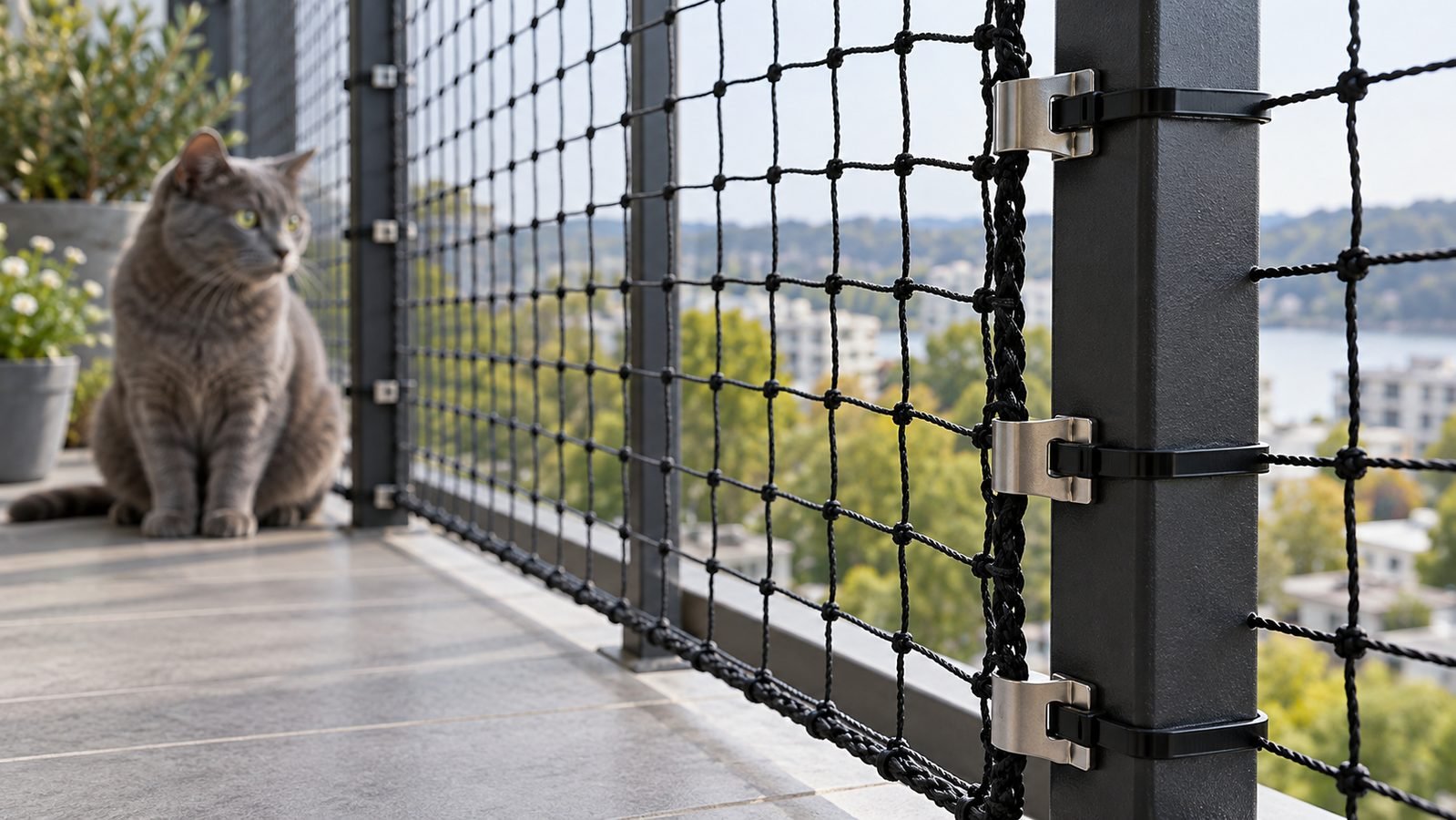
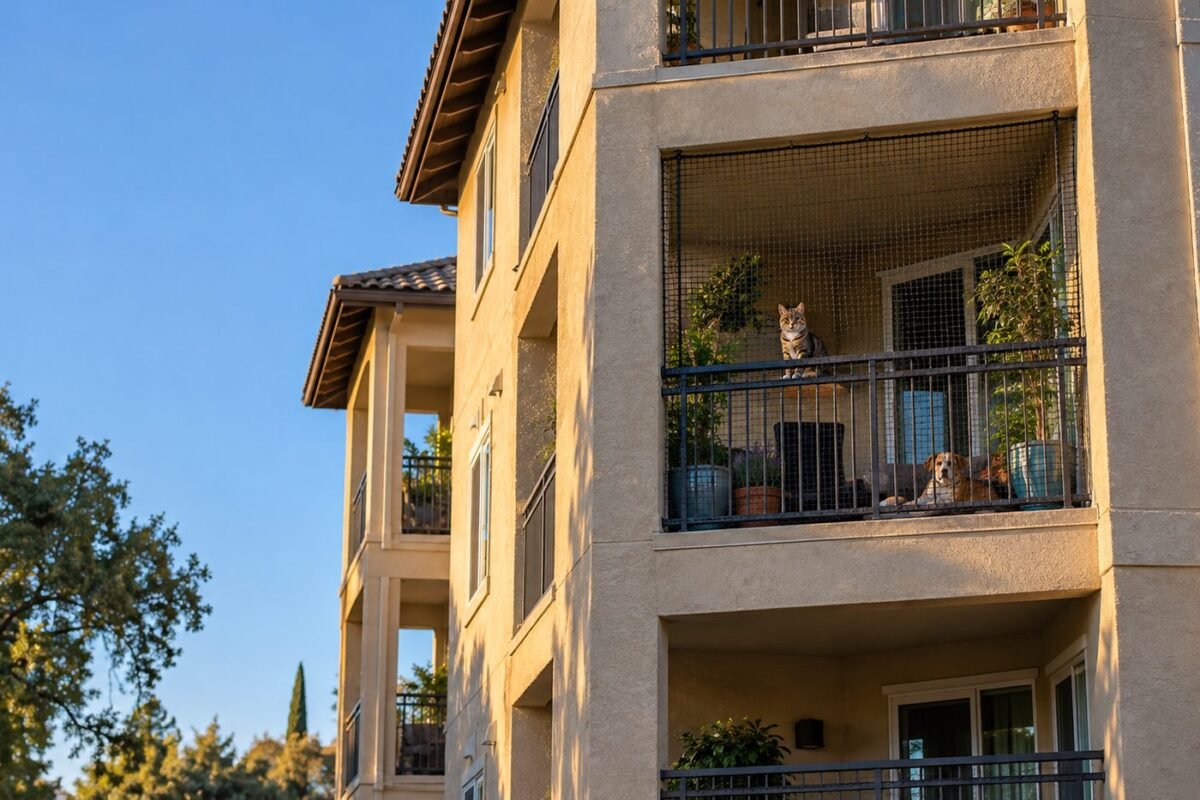
Netting is the most common answer because it works and stays visually light. Cat balcony netting is usually polyethylene, knotted or knotless, black or clear.
Mesh size is the measurement that matters: the opening must be smaller than the animal’s head, which for most cats means tighter than people expect. A balcony net for dogs can run coarser, since the job is obstruction rather than containment.
Three failures recur. Ultraviolet degradation, which turns any polymer brittle – ordinary nylon cable ties fail first, and stainless clips or UV-rated ties last much longer. Slack, which gives a climbing animal footholds and lets a determined one work an edge loose. And perimeter gaps, because the net is rarely the weak point; the line where it meets the structure is.
Screens, Panels, and Fences
Where netting is not wanted, rigid systems do the same job. A balcony screen for cats is usually a fine mesh panel inside a frame, clamped to the uprights. The frame carries the load, which is why these survive pushing better than netting.
A balcony cat fence usually means an angled top extension that leans inward, so a climbing animal reaches the overhang and cannot continue. Nothing above head height is needed. That makes it the main answer to how to cat proof balcony without roof cover, since cats climb vertically far better than they climb upside down.
For larger animals the usual approach is a rigid panel along the lower section only, closing the bottom gap and the view that triggers lunging. Balcony barriers for dogs at that height are cheaper, less visible, and sufficient where jumping is not the concern.
Plastic lattice and decorative screening are the one category to avoid. Sold cheaply for exactly this purpose, they turn brittle quickly in Central Valley sun.
Full Enclosures
At the top end are balcony cat enclosures – a framed structure of mesh panels covering some or all of the space, with a roof. Build quality varies, and two things separate the ones that last.
Mounting first: a good enclosure stands on its own frame or clamps to the railing, and a poor one ships with deck screws. Access second: what sits under your floor still needs examining periodically, and so do the railing anchorages. A cat barriers for balconies installation bolted permanently across the whole floor has to be taken apart before each routine examination.
The practical answer is modular: panels that unclip, a frame that lifts out, hardware you can reach. Built that way, an enclosure works for the animal and for whoever inspects underneath at the next cycle.
Wind Load on Solid Panels
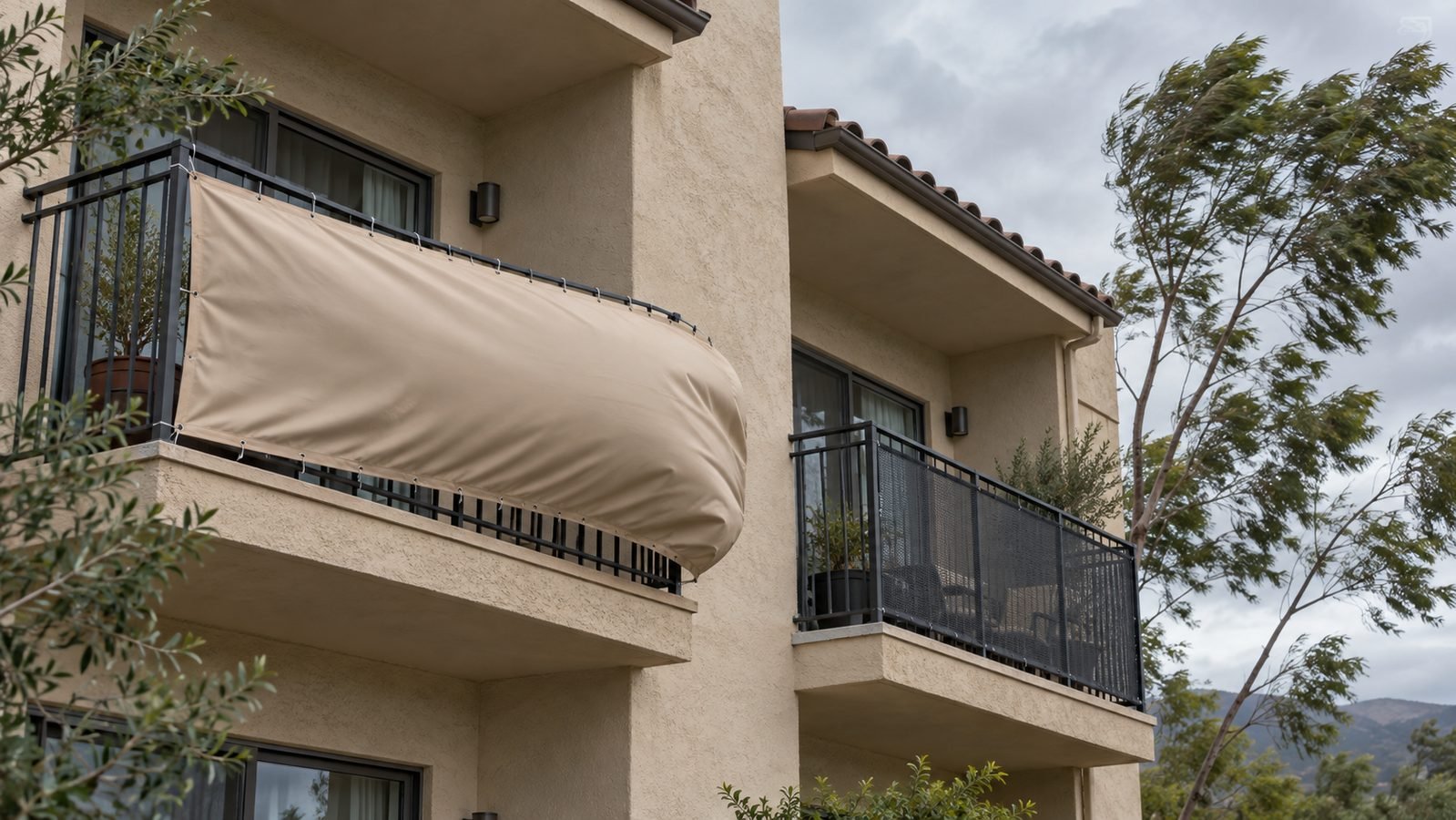
Under Table R301.5, guard infill is rated for fifty pounds applied horizontally over one square foot – a load in one spot, not pressure across a whole panel. The top of the guard is rated separately for a 200-pound concentrated load.
Hang a solid panel across that guard and the load changes. Wind pushes the entire surface at once and transfers the force into the posts and their anchorage, which the guard load requirements do not account for. Dog proof balcony railing panels of solid plastic or canvas are the worst version, since they catch the most wind.
Mesh and netting pass air and largely avoid this. If you want a solid panel for privacy, have the guard checked first – where the anchorage is hidden, that means opening a connection.
What Your Lease or Association Allows
In a condominium the platform is usually exclusive-use common area: the association controls it even though only you walk on it. Alterations need written approval under the CC&Rs, and cat-proofing an apartment balcony without it can end in a removal demand at your expense. For governing documents adopted or amended since 2001, Civil Code Section 4715 guarantees an owner at least one pet, subject to reasonable association rules. That right covers the animal, not changes to the structure.
Associations also carry obligations of their own. SB 326 requires a licensed architect or engineer to evaluate these elements on a nine-year cycle, and rental buildings of three or more units answer to the statute named above on a six-year one. Both require access. An installation nobody can remove becomes the association’s problem and then yours.
Ask three questions before buying: is anything penetrated, can it be fully removed in an hour, and does it obstruct the floor, drainage, or railing connections. Balcony protection for cats that answers all three cleanly rarely draws an objection. Put those answers in writing with the request. A balcony protector for dogs held to the same test clears approval as easily.
Before You Let Them Out
A barrier tight when new can loosen with use. Run the list below before the door opens, and again each spring.
- Check the bottom gap first. Floor to lowest member, at every point along the run.
- Push the barrier hard with both hands. If it moves, an animal will move it. That is how the load arrives.
- Test the mesh against a real head. Looking at it is not enough.
- Look for climbing furniture. Chairs, planters, and boxes near the top cancel the added height.
- Confirm drainage is clear. Nothing may block the scupper or the slope.
- Inspect fixings each spring. Ties, clips, and clamps after one Valley summer are weaker than they were in March.
If any item fails, fix it before the animal goes out again. Tenants should report a loose railing or soft decking in writing.
Check the Structure Before You Add a Barrier
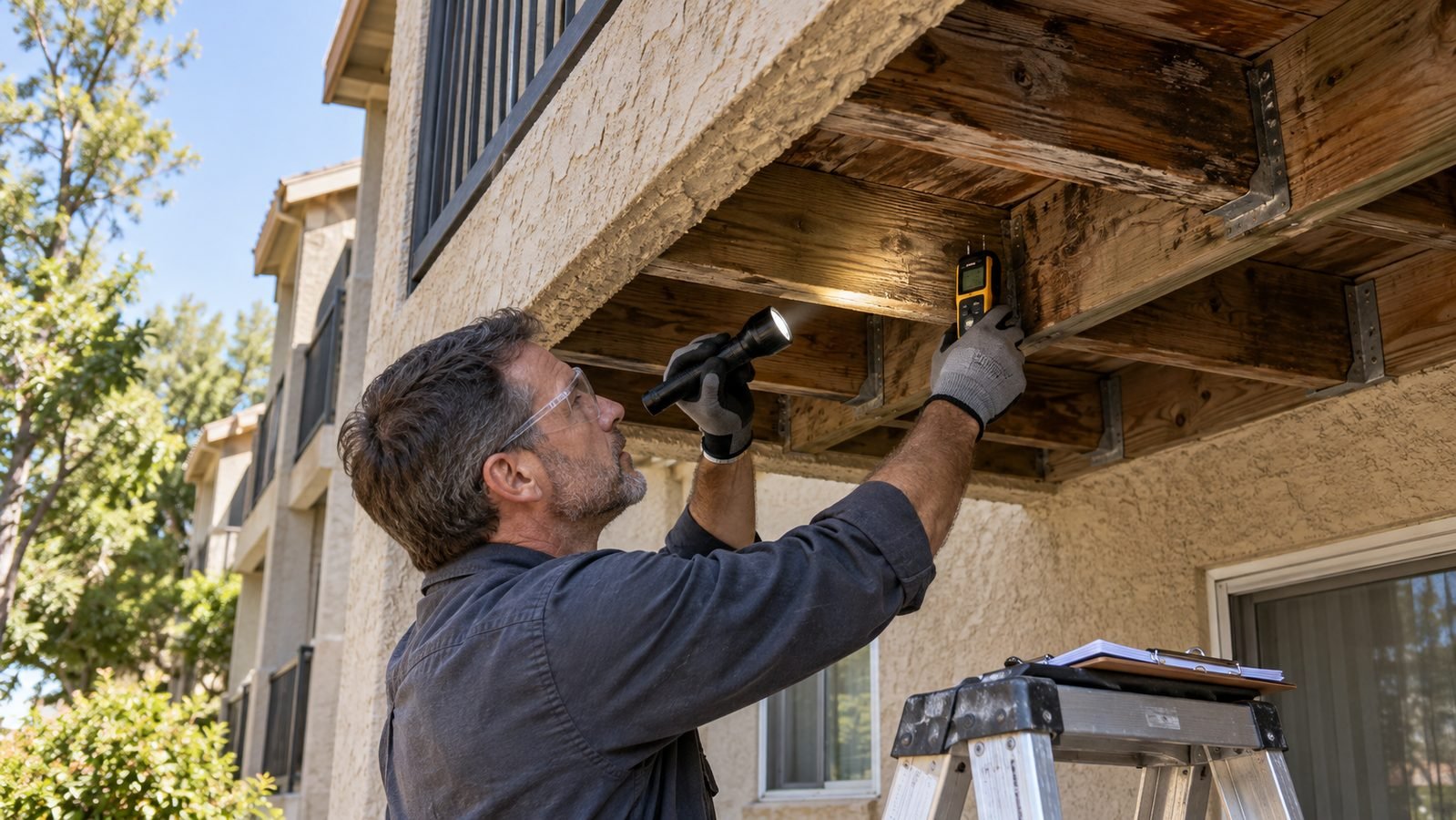
Pet safety here rests on two things: a barrier the animal cannot pass and a structure that can carry it. Making this space safe for an animal takes an afternoon, but cat proofing a balcony properly depends on the structure being sound to begin with. Clamp to the uprights, keep the floor intact, prefer mesh to solid panels, and make every part removable.
If the floor feels soft, the railing moves, or the underside has never been examined, deal with that first – ABD Inspections can tell you what you are attaching to. A balcony guard for dogs fastened to a failing structure protects nothing. Neither does anything else bolted to it.