Two California laws govern whether the balcony you are standing on has been checked for hidden decay, and almost everyone confuses them. SB 721 and SB 326 were written to solve the same problem — elevated structures that decay unseen and fail without warning — but they apply to different buildings, set different deadlines, and demand different inspectors. Getting them mixed up is the single most expensive mistake a property owner or HOA board can make.
This guide clears up the confusion completely. It explains where both laws came from, exactly who each one covers, and walks through every meaningful difference between them, backed by a side-by-side table you can return to. It draws on the field experience behind ABD Inspections, a Sacramento firm with more than a thousand assessments completed across California, and it is written to answer the one question every owner starts with: which law is mine, and what does it actually require?
The Tragedy That Created Both Laws
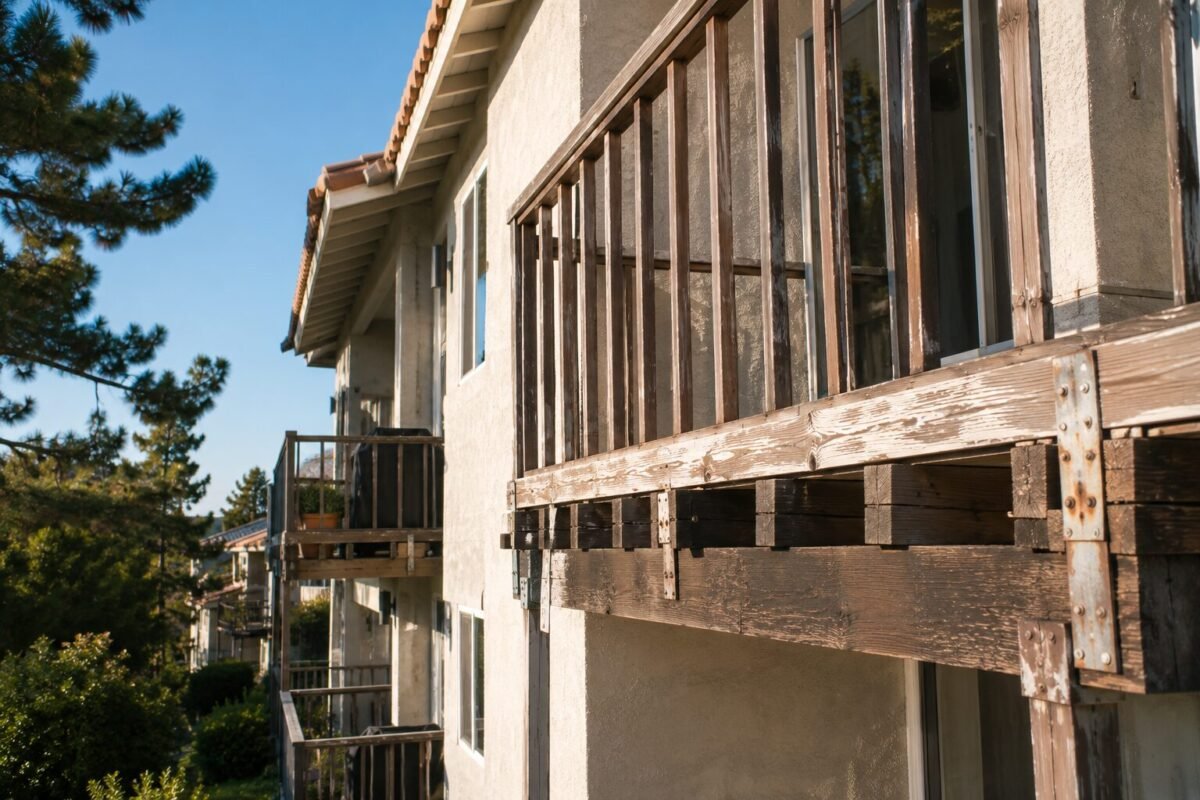
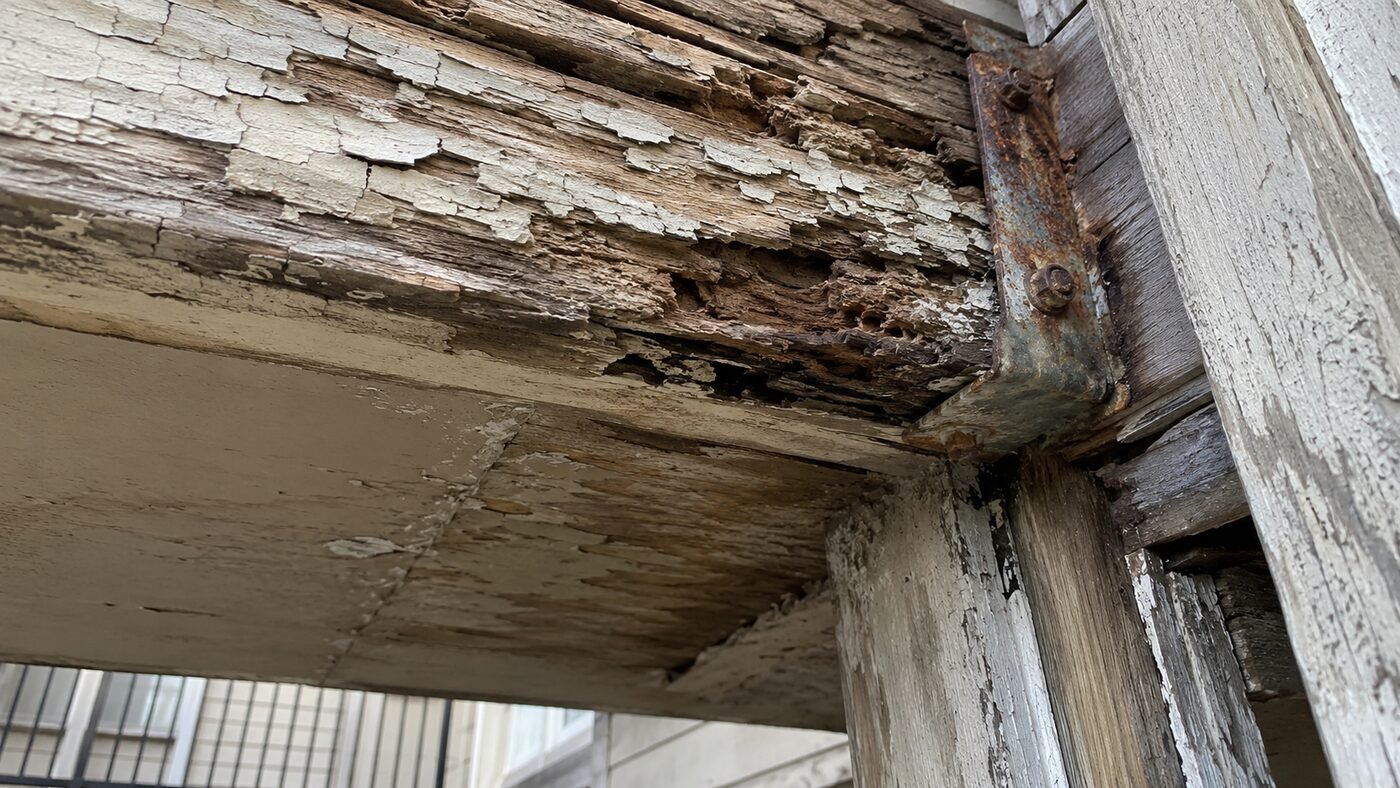
Both statutes trace back to a single night in June 2015. A fourth-floor balcony in Berkeley collapsed during a birthday gathering, killing six people and injuring seven. Investigators found the cause was dry rot — the wood framing had decayed behind an intact-looking surface, weakened by water that had been trapped for years. Nothing visible had warned anyone.
California’s response was to require what no one had been doing: regular, professional inspection of the structures most likely to fail this way. Because rental apartments and owner-governed condominiums operate under entirely different ownership and management structures, the state wrote two separate laws rather than one. The California balcony inspection law became, in practice, a pair of laws — one for landlords, one for homeowners associations — and that split is the source of nearly all the confusion that followed.
What Both Laws Have in Common
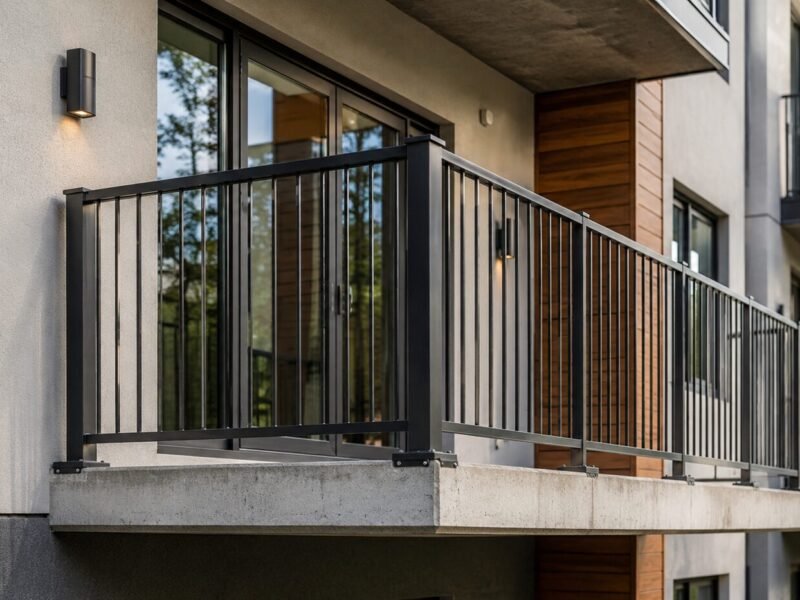
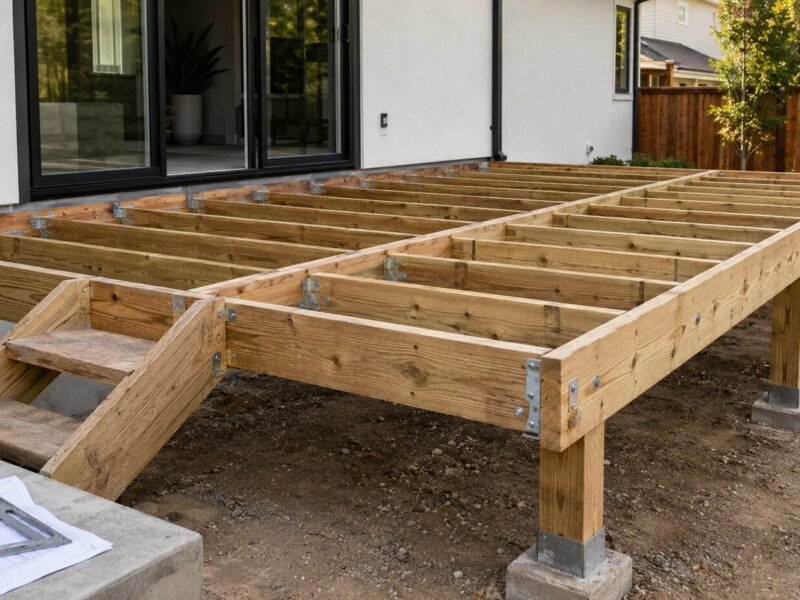
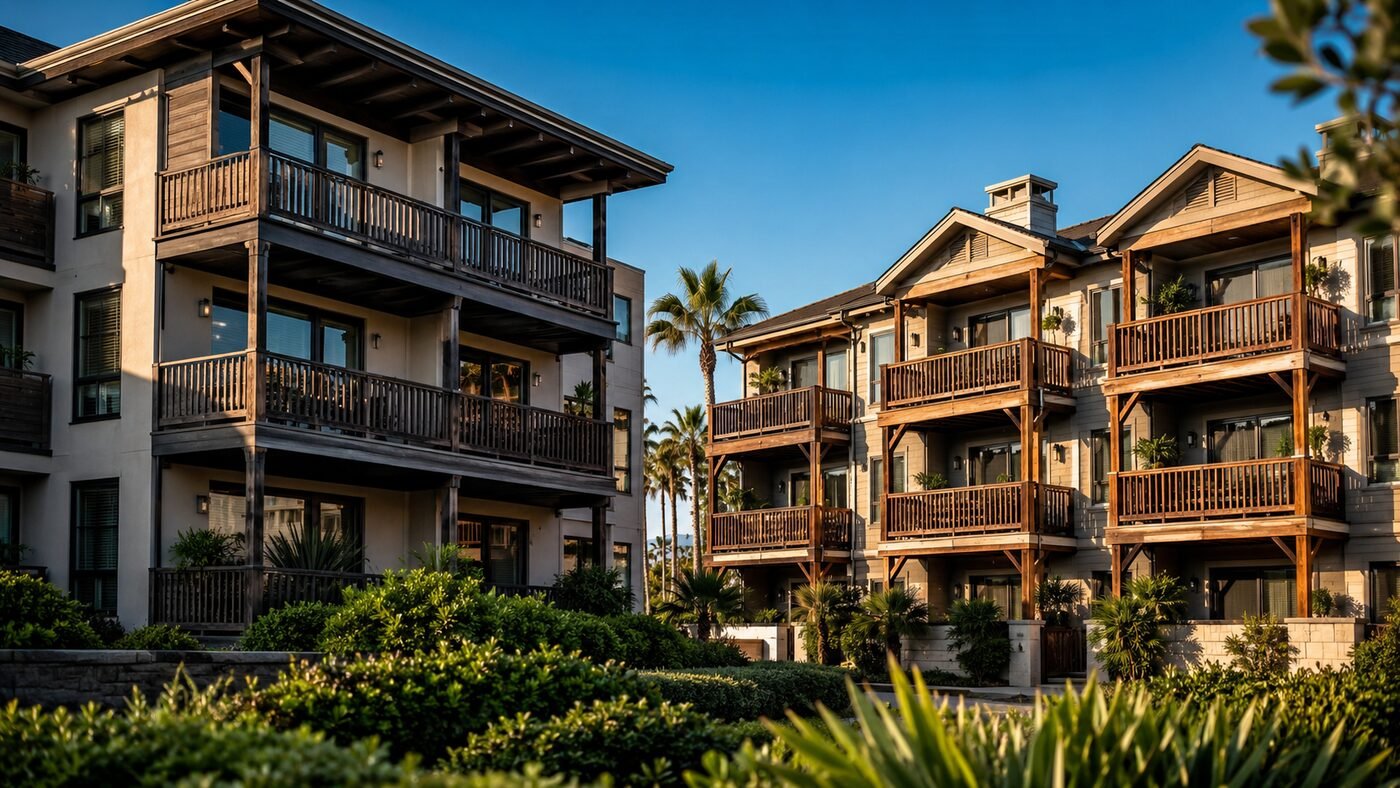
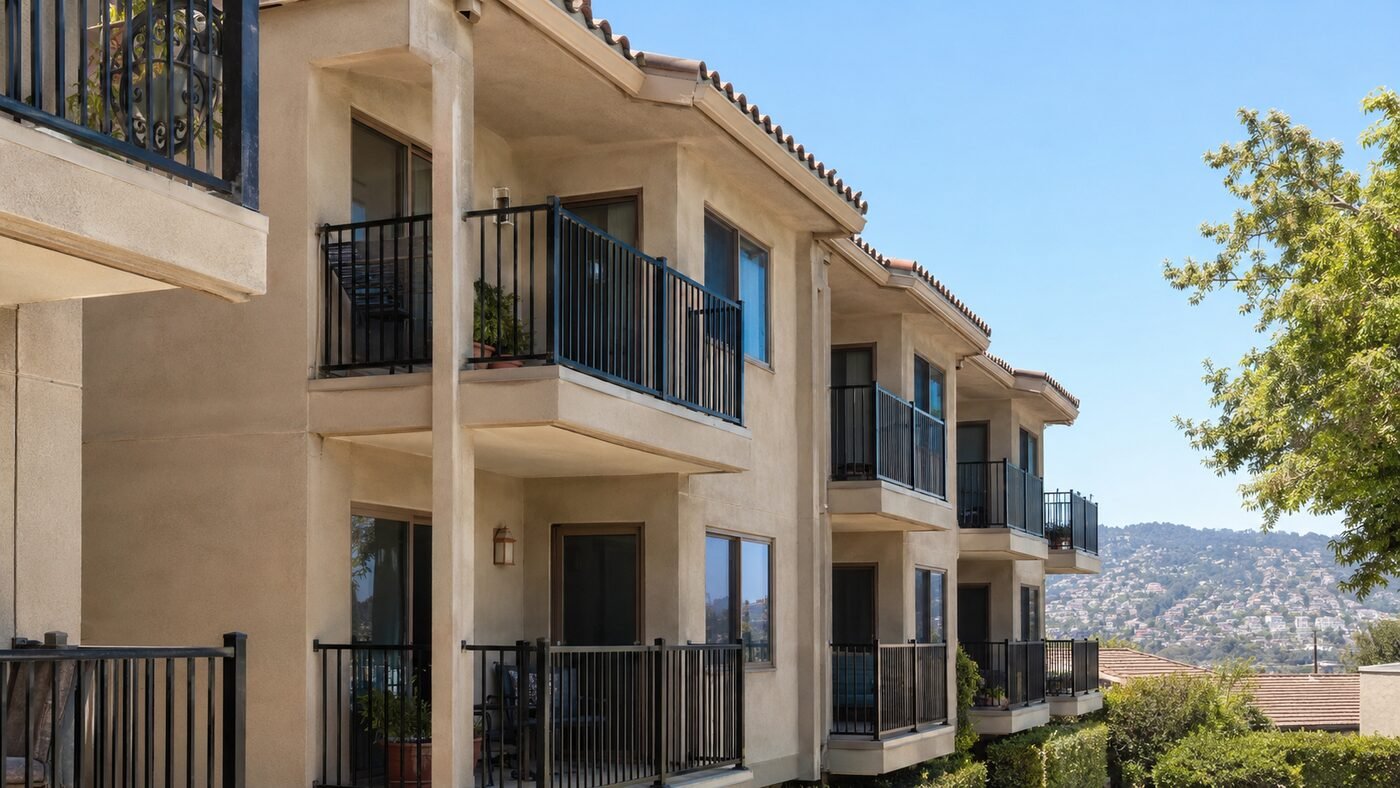
Before the differences, it helps to see the shared foundation, because the core purpose of SB721 and SB326 is identical. At heart, both laws target the same category of structure, the exterior elevated element — the industry shorthand is EEE — meaning any balcony, deck, porch, stairway, landing, or walkway that extends beyond the building’s wall, sits more than six feet above the ground, and relies on wood for its structural support.
Both laws share the same underlying logic as well, and it comes down to a few common threads:
- A qualified professional is mandatory — maintenance staff or a casual visual check does not satisfy either law.
- The focus is structural — both center on the load-bearing framing and the waterproofing that shields it from water.
- Hazards must be repaired on a timeline — finding a problem is not enough; the law requires fixing it within a defined window.
- Water is the common enemy — each law treats moisture intrusion and the dry rot it breeds as the primary threat. A purely concrete or steel structure can fall outside both laws — though many balconies that look like solid concrete hide a wood-framed substructure, so the construction should be confirmed before assuming any exemption applies. With that common ground established, the differences are what matter.
SB 721: The Law for Rental Apartments
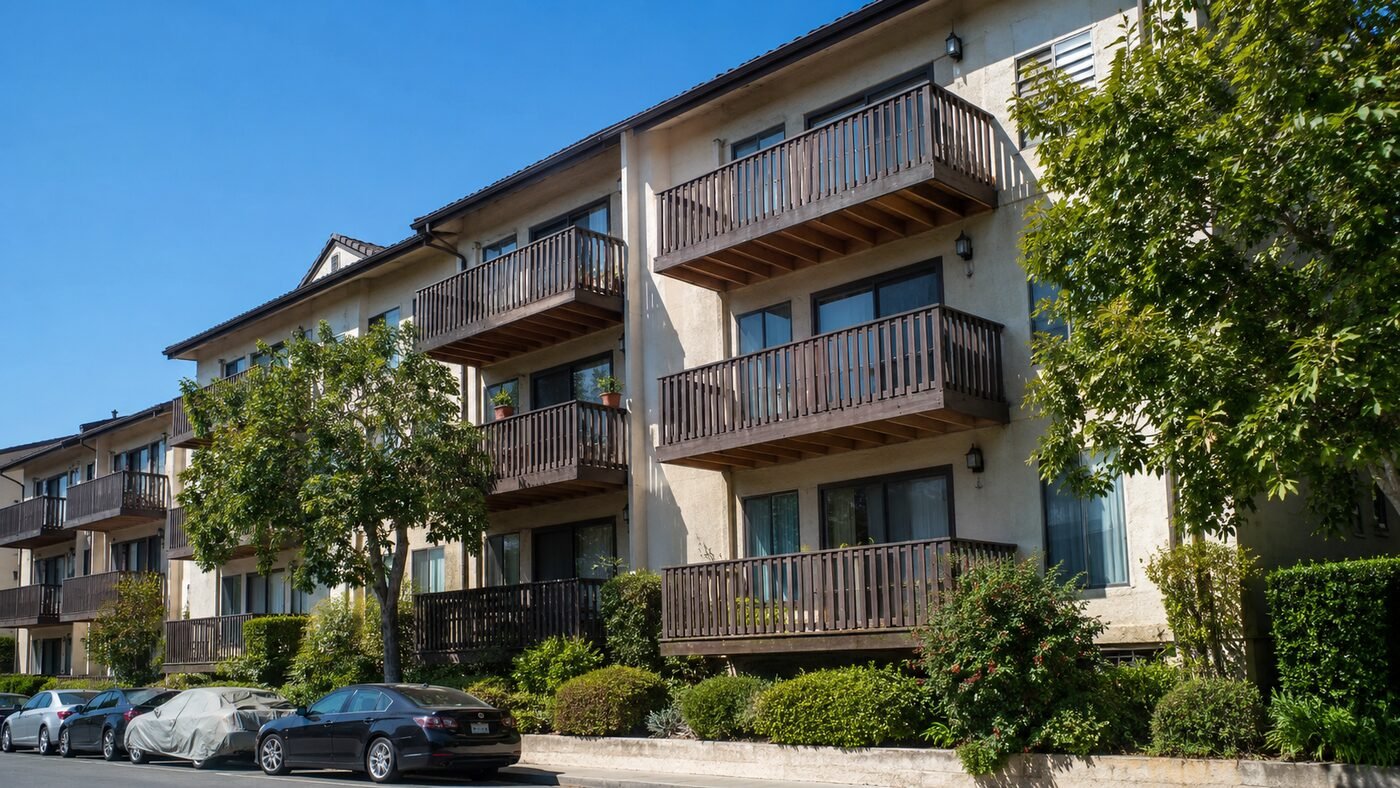
Signed in 2018 and codified as Health & Safety Code §17973, SB 721 governs multifamily rental buildings with three or more units. The responsibility falls squarely on the property owner or landlord, who must arrange the inspection, keep the report, and see that any repairs get done — the three practical pillars of SB 721 compliance.
An SB 721 balcony inspection examines at least fifteen percent of each type of exterior elevated element, chosen to represent the range of conditions across the property, and it can require exploratory openings to see concealed framing directly. The law deliberately allows a fairly broad pool of qualified inspectors. That pool includes a licensed architect, a civil or structural engineer, a contractor holding an A, B, or C-5 license with at least five years of relevant experience, or a certified building inspector accepted by the local jurisdiction. That breadth gives owners flexibility, and it makes scheduling an SB 721 balcony inspection easier in a market where qualified professionals are in heavy demand.
SB 326: The Law for Condominiums and HOAs
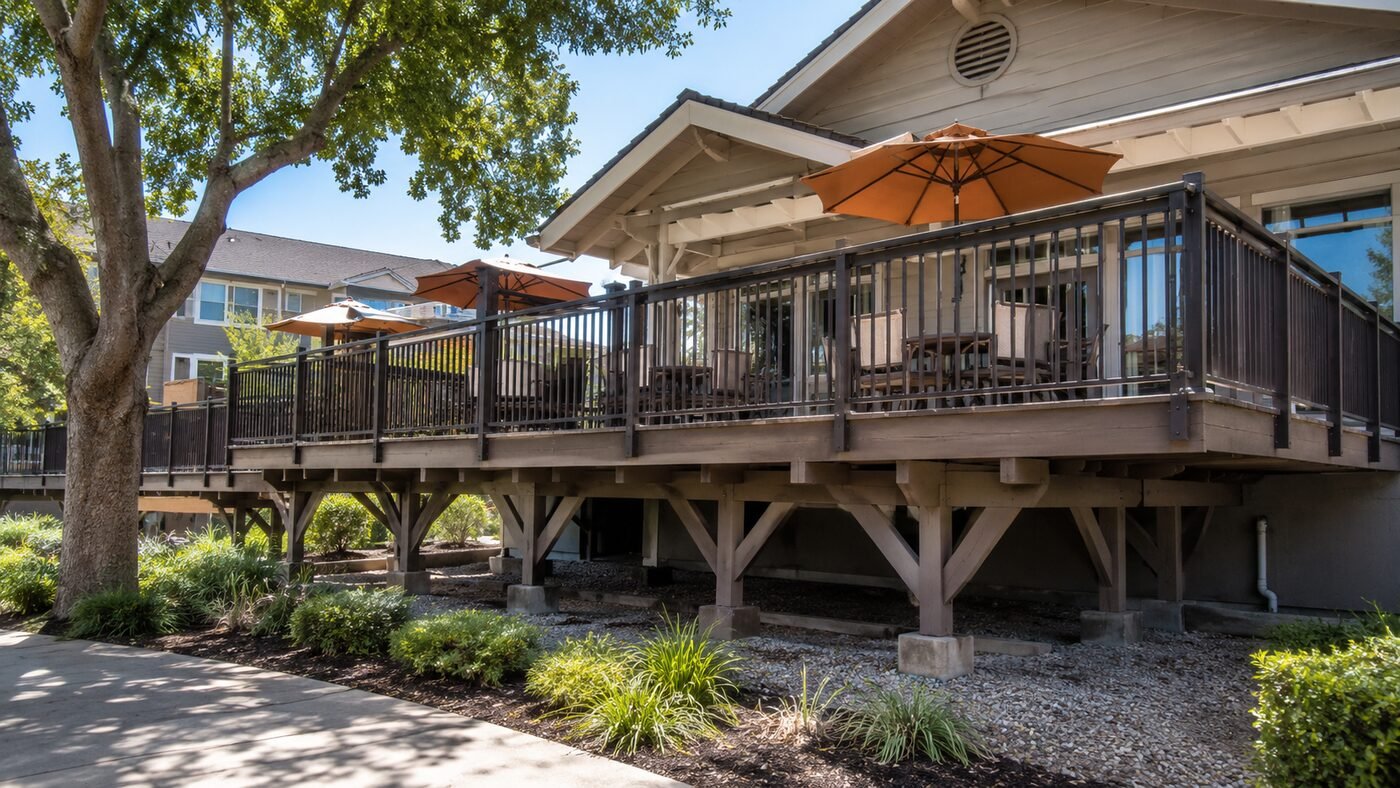
Signed a year later in 2019 and written into Civil Code §5551 as part of the Davis-Stirling Act, SB 326 governs condominiums and common interest developments run by a homeowners association. Here the legal responsibility sits with the HOA board, not individual owners, which changes the entire compliance process from a single decision into a governance one.
The SB 326 inspection requirements are stricter in two important ways. First, the inspector pool is narrower: only a licensed architect or a structural or civil engineer may perform an SB 326 HOA inspection — general contractors and certified building inspectors, both allowed under SB 721, do not qualify here. Civil engineers were added to that pool by Assembly Bill 2114 in 2024. Second, the sampling is statistical rather than a fixed percentage: the inspection must reach a ninety-five percent confidence level with a five percent margin of error, which often means examining a larger share of elements than SB 721’s flat fifteen percent. The findings from an SB 326 HOA inspection must also feed into the association’s reserve study, tying the assessment directly to how the board plans and funds future repairs.
The Core Differences at a Glance
The fastest way to understand SB 721 vs SB 326 is to place them side by side. The table below lays out every distinction that affects what you must do, when, and with whom.
|
Feature |
SB 721 |
SB 326 |
|
Property type |
Rental apartments, 3+ units |
Condominiums / HOA-governed developments |
|
Code section |
Health & Safety Code §17973 |
Civil Code §5551 (Davis-Stirling) |
|
Year passed |
2018 |
2019 |
|
Responsible party |
Property owner / landlord |
HOA board |
|
First deadline |
Jan 1, 2026 (extended by AB 2579) |
Jan 1, 2025 (not extended) |
|
Re-inspection cycle |
Every 6 years |
Every 9 years |
|
Who may inspect |
Architect, civil/structural engineer, A/B/C-5 contractor, or certified building inspector |
Architect or structural/civil engineer only |
|
Sampling method |
At least 15% of each element type |
Statistical sample (95% confidence, 5% margin) |
|
Findings feed into |
Owner’s records and local enforcement |
HOA reserve study |
On every one of these points, SB 721 vs SB 326 comes down to a single fact — rental or condo. Both deadlines have now passed, which means owners and boards who have not yet inspected are operating out of compliance. The practical takeaway is simple: identify which column describes your building, and let it drive every SB 721 compliance or SB 326 step from there.
The Deadline Confusion, Resolved
Nothing about these laws causes more trouble than the dates, so it is worth stating them plainly. The original SB 721 deadline was January 1, 2025, but Assembly Bill 2579, passed in September 2024, extended it by one year to January 1, 2026. That single SB 721 deadline extension applied only to rental properties, not to condos. The SB 326 compliance deadline for condominiums stayed fixed at January 1, 2025 and was never extended.
The consequence trips up owners with mixed portfolios constantly: a landlord who also sits on a condo board faces two different deadlines under two different laws, and the earlier one — SB 326 — arrived first. Both dates are now behind us, and after the initial inspection each law settles into its own recurring rhythm: six years for SB 721, nine years for SB 326. Marking the next cycle on the calendar the day an inspection finishes is the surest way to never face this confusion again.
What Newer Legislation Changed
These laws have not stood still, and two recent amendments matter. Assembly Bill 2114, effective in 2024, widened the SB 326 inspector pool by adding licensed civil engineers alongside architects and structural engineers — a modest but welcome expansion in a field short on qualified professionals.
More substantial is Senate Bill 410, effective January 1, 2026, which reshaped several SB 326 details. It defines the inspection sample statistically, requires a summary on the first page of the report, extends report retention to two full inspection cycles, and — significantly for anyone buying or selling a condo — adds the most recent inspection report to the disclosure package a seller must provide under Civil Code §4525. For condo owners, that last change means an EEE inspection California report is now part of the paperwork that changes hands at resale, giving the document a role well beyond compliance.
When the Rules Are Not Followed
Non-compliance is where the two laws start to bite, and the mechanics are worth knowing in advance. When an inspection turns up a hazard, a repair clock begins — typically 120 days to pull a permit and a further 120 to finish the work, with extensions granted only for genuine cause. What follows a missed window is not a single penalty but several pressures arriving together.
The SB 721 penalties for violations left unresolved reach $500 a day, and the state can secure that debt with a building safety lien recorded against the title, which surfaces the moment an owner tries to sell or refinance. Insurers watch for open safety violations too, and a building carrying them may find its premium climbing or its policy quietly not renewed. The sharpest exposure is legal: if a resident is hurt on a structure that was never brought up to standard, an inspection left undone reads, in court, as a landlord who knew the obligation and skipped it. Enforcement is not theoretical either — building departments in cities like Los Angeles pursue these cases through citations and unsafe-structure orders. The reassuring half of the picture is that every one of these outcomes flows from inaction, and each dissolves the moment an owner books the inspection and follows the report.
Which Law Applies to Your Building
For all the detail, the threshold question is refreshingly simple, and it turns on ownership rather than architecture. If your building is a rental with three or more units, you follow the SB 721 inspection track. If it is a condominium governed by a homeowners association, the SB 326 inspection rules apply — and a condo stays under SB 326 even when individual units happen to be rented out, because the governing statute follows the ownership structure, not the occupancy.
To settle which law governs your property, three questions resolve almost every case:
- Is it a rental with three or more units? If yes, you are on the SB 721 track, with an exterior elevated element inspection due on a six-year cycle.
- Is it a condominium run by an HOA? If yes, SB 326 governs, regardless of whether some units are rented out.
- Is it inside San Francisco? If yes, an additional local obligation applies on top of the state law.
That last layer is worth expanding. Buildings inside San Francisco carry an added requirement under SF Section 604, which is broader than either state law and does not exempt a property simply because it satisfied the statewide requirement. When more than one rule applies, they stack rather than cancel. Meeting the state statute alone does not close out the local one, so genuine SB 326 compliance in San Francisco means clearing both.
Turning Two Confusing Laws Into One Clear Plan
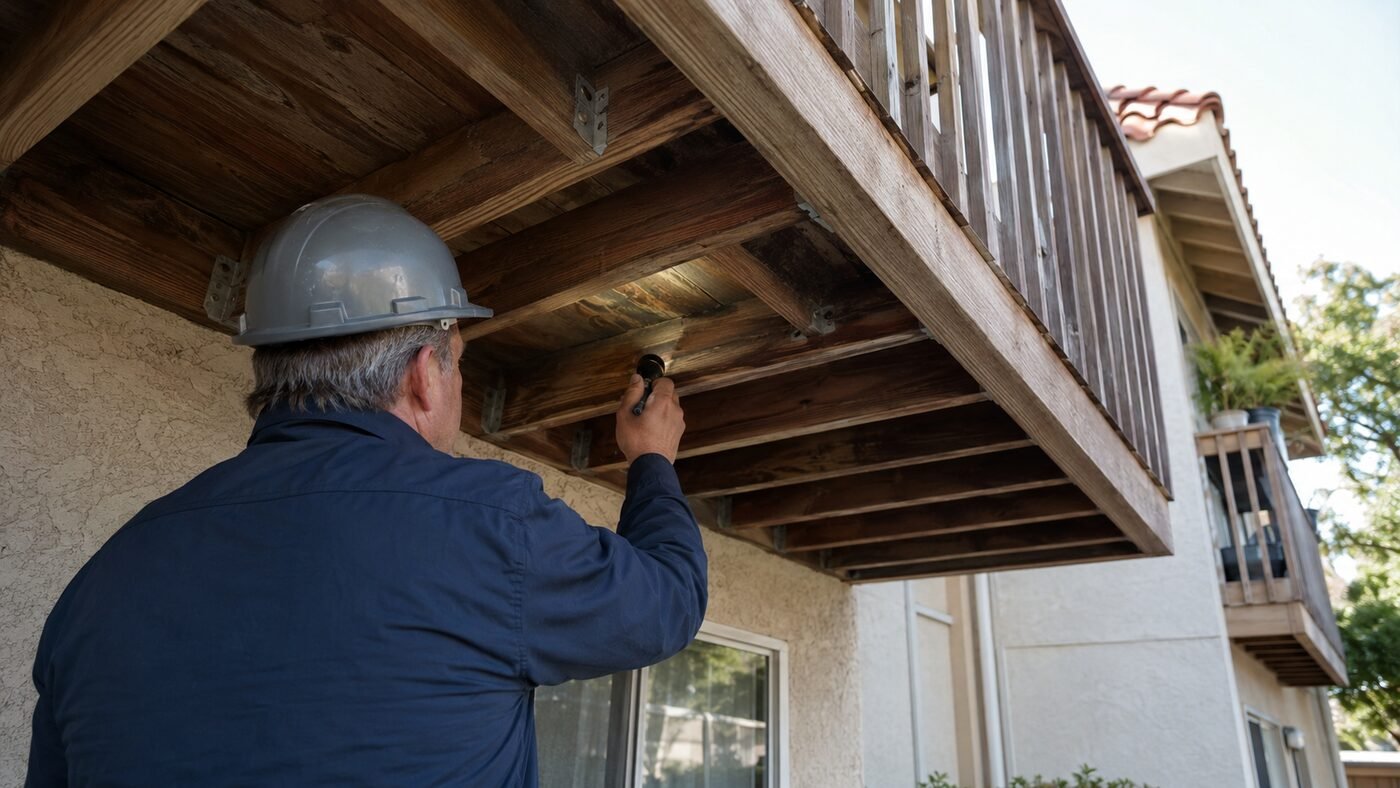
Stripped of their code sections and sampling formulas, SB 721 and SB 326 ask the same thing of every owner: have your elevated structures examined by the right kind of professional, on the right schedule, and act on what the inspection finds. The differences that matter — who inspects, how often, on what deadline, and who bears responsibility — all follow from a single fact about your building, which is whether it is a rental or a condominium.
The California balcony inspection law ultimately splits along one line — rental or condo. If you are unsure which California deck and balcony inspection law governs your property, or where you stand now that both initial deadlines have passed, a qualified professional can settle the question quickly and lay out exactly what compliance looks like from here. Whether the answer is SB 721, SB 326, or an added obligation under SF Section 604, the purpose behind every EEE inspection California requires is the one that came out of Berkeley in 2015: to find the hidden damage before it reaches the people standing above it.