Deck Inspection
in Sacramento
Professional deck inspection services for homeowners, property managers and HOA boards. We check footings, framing, ledger attachment, railings and waterproofing, deliver a photo-documented report, and handle any repairs in-house.
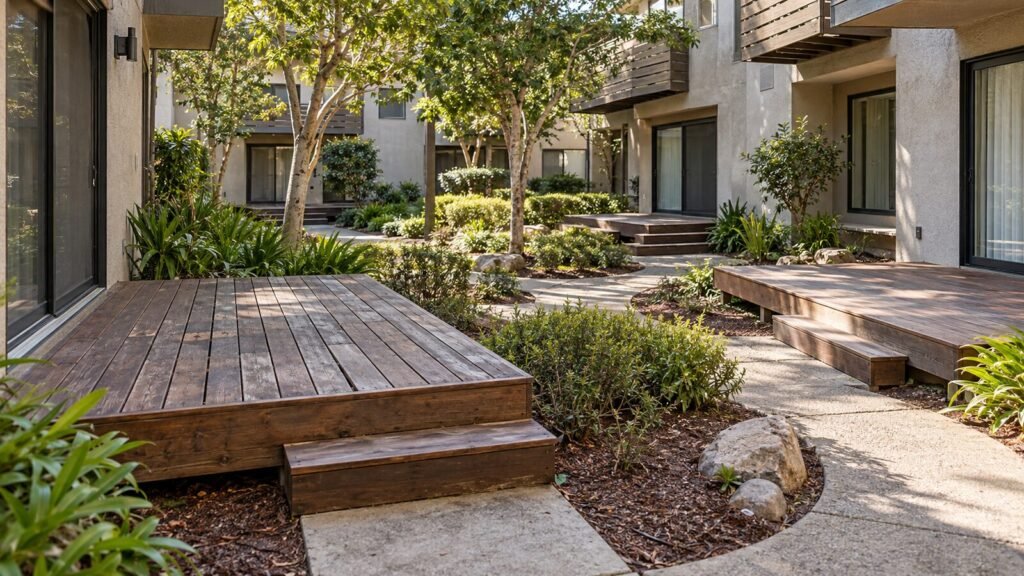
What Is a Deck Inspection?
A deck inspection is a structural safety assessment of an elevated wood or wood-framed structure and every component that keeps it attached to the building. A professional deck inspection goes past the walking surface: it evaluates the ledger connection, joists and beams, post-to-beam and post-to-footing hardware, guardrail anchorage, drainage and the condition of the framing hidden beneath the decking.
Most decks do not fail because a board breaks. They fail at the connections. Industry research on residential deck collapses points repeatedly to the ledger — the board that fastens the deck to the house — as the single most common failure point, usually because it was nailed instead of bolted, or because water got behind it and rotted the rim joist. That damage is invisible from the surface, which is exactly why a deck safety inspection is worth doing before there is something to see.
Who Needs a Deck Inspection?
- Homeowners with a deck more than 10–15 years old, or one built by a previous owner without permits
- Buyers and sellers who need a deck assessed before closing
- Landlords and apartment owners subject to California deck inspections under SB 721
- HOA boards and condominium associations covered by SB 326
- Anyone who has noticed movement, soft spots, rust stains or a wobbling railing
- Property owners planning to refinish or expand an existing deck
Pressure-treated lumber resists decay; the fasteners, flashing and connection hardware holding it together do not. A deck that looked solid five years ago can be structurally compromised today with no visible warning at the surface. If your deck has never been inspected, schedule a deck safety inspection before the next time it is fully loaded.
What a Deck Inspection Is Actually Looking For
Four failure modes account for the overwhelming majority of deck collapses and injuries. Each one is detectable long before it becomes dangerous.
The deck pulls away from the house because the ledger was nailed rather than through-bolted, or because missing flashing let water rot the rim joist behind it.
Undersized, shallow or shifting footings let posts settle and rack the frame. A deck footing inspection is the only way to confirm what is actually under the posts.
Fasteners that are not rated for treated lumber corrode from the inside out. The connection fails while the wood around it still looks sound.
Rail posts bolted through the rim with a single lag, or notched at the base, cannot resist the lateral load code requires. Railings are the most common cause of fall injuries.
Deck Inspection Checklist
This is the deck inspection checklist our inspectors work through on site. Homeowners can use a shortened version of it as a seasonal self-check between professional visits — but note that several items require probing, opening or load testing that should not be attempted from a ladder.
1 Foundation & Footings
- Footings bear on undisturbed soil at the depth and size required by local code
- No visible settlement, heaving, cracking or erosion around the pier
- Posts sit on standoff bases, not in direct contact with concrete or soil
- Post bases are anchored, not simply resting on the footing
- No rot or insect damage at the base of any post
2 Ledger & House Connection
- Ledger is through-bolted or lag-screwed to the rim joist at correct spacing
- Flashing is continuous, correctly lapped and directs water away from the wall
- No staining, swelling or softness in the siding or rim joist behind the ledger
- Ledger is not attached to a cantilever, veneer or non-structural element
- Lateral load connectors installed where the code requires them
3 Framing
- Beams sized and supported correctly, with no splitting at the bearing points
- Joists free of rot, insect damage, excessive deflection and unsupported notching
- Joist hangers fully nailed with the correct fasteners — not deck screws
- Blocking and bracing present where spans and post heights require it
- No sagging, bounce or lateral sway under load
4 Decking, Stairs & Rails
- Deck boards sound underfoot, with no soft, spongy or discolored areas
- Stair stringers, treads and risers uniform, secure and free of rot
- Handrail graspable and continuous; stair rails anchored top and bottom
- Guardrail height and baluster spacing meet current code
- Rail posts resist a firm lateral push with no movement at the base
5 Water & Drainage
- Surface drains away from the house; no standing water or ponding
- Gaps between boards clear of debris; no soil or planters trapping moisture
- Waterproofing membrane intact on covered or over-living-space decks
- No efflorescence, rust streaks or dark staining on framing below
- Vegetation and irrigation kept clear of posts, beams and the ledger
A homeowner walking this deck inspection checklist will catch obvious problems. What it cannot tell you is the condition of the framing behind the ledger flashing or under the decking — the two places where deck failures actually start.
Our Deck Inspection Process
A clear deck inspection process from the first call to the final report, with no surprise charges and no pressure to buy repairs you do not need.
Free Consultation & Quote
We take the basics over the phone — deck size, height, age, construction type, access — and issue a written quote. For apartment and HOA properties we count the elevated elements and scope the work against the applicable California statute.
Visual Structural Assessment
The inspector works the full deck inspection checklist above: footings, posts, beams, joists, ledger, decking, stairs, railings and flashing. Every deficiency is photographed and located.
Probing & Selective Opening
Suspect areas are moisture-metered and probed. Where the visual assessment suggests hidden damage, we open a small section of decking or trim to inspect the framing directly. On a deck framing inspection this is often the only way to confirm the condition of a ledger or rim joist, and where it makes sense we leave a removable deck inspection plate so the next inspection does not require new cuts.
Deck Inspection Report
You receive a written deck inspection report with photographs, a condition rating for each component, code references for anything non-compliant, and repair recommendations sorted into three tiers: immediate safety hazard, repair this season, monitor.
Repair & Re-Inspection
If work is needed, our licensed construction team handles it in-house — from a ledger rebuild to full deck replacement. Because we perform deck inspection and repair under one license, you deal with one schedule, one invoice and one accountable party.
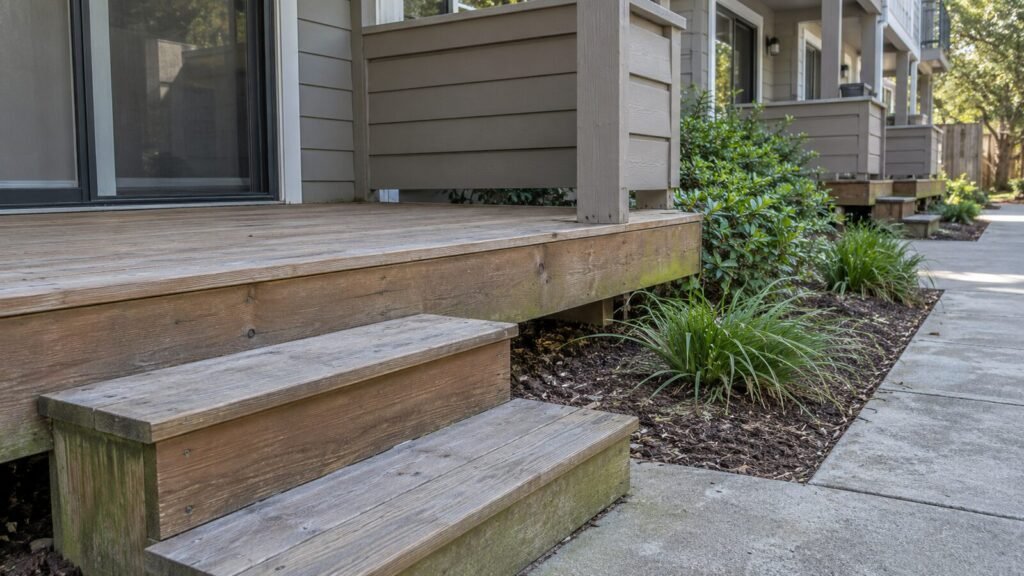
What We Inspect
Every deck building inspection covers the complete load path — from the soil under the footing to the top of the guardrail.
Footings & Posts
Bearing depth, footing size, soil condition, post base hardware, standoff clearance and rot at grade. A deck footing inspection confirms what is under the structure, not just what is visible above it.
Ledger & Flashing
Fastener type, pattern and spacing, flashing continuity, rim joist condition, lateral load connectors and evidence of water intrusion behind the ledger board.
Beams, Joists & Hardware
Span, sizing, bearing, deflection, splitting, notching, hanger installation and fastener corrosion. This is the core of any deck framing inspection.
Decking & Surfaces
Board condition, fastening, gapping, soft spots, coating failure and the drainage performance of the finished surface.
Stairs, Landings & Porches
Stringer integrity, tread and riser uniformity, landing support and handrail continuity. Porch deck inspection is included for any covered or attached porch structure.
Railings & Guards
Height, baluster spacing, post anchorage and resistance to lateral loading — the single most common source of deck-related fall injuries.
Deck Inspection Cost
Deck inspection cost depends on the structure, not on a flat rate — a ground-level 200 sq ft deck and a three-story stacked balcony run are different jobs. These are the factors that set the price.
| Factor | Why It Matters |
|---|---|
| Deck size and number of levels | More surface, framing and connections to assess |
| Height above grade | Elevated and multi-story decks require more access equipment |
| Construction type | Wood, composite over wood framing, or elevated concrete over wood |
| Access below the deck | Open framing inspects quickly; enclosed soffits require opening |
| Extent of probing required | Selective opening and moisture testing add time |
| Number of units | Apartment and HOA properties are quoted per elevated element |
| Report format | Standard report vs. engineer-stamped documentation for compliance filing |
| Travel distance | Sacramento metro vs. outlying service areas |
We quote every job in writing before we start, and the inspection fee is credited toward repair work if you choose to have us complete it.
Send us the size, height and age — we come back with a written estimate, not a range.
Other Inspection Services We Provide
The right inspection depends on who owns the building and where it stands. Every service is performed by the same licensed team, and repairs are handled in-house.
Apartment and rental buildings with 3+ units. Health & Safety Code §17973, every 6 years.
SB 326 InspectionCondominiums and HOA communities. Civil Code §5551, engineer-led, every 9 years.
SF Section 604San Francisco ordinance for metal balconies, walkways and fire escapes, beyond state law.
HOA Balcony InspectionSB 326 assessment for boards: invasive testing, stamped report and clear repair rules.
Balcony InspectionStructural assessment under SB 721 and SB 326, with repairs handled in-house.
California Deck Inspections: When the Law Requires One
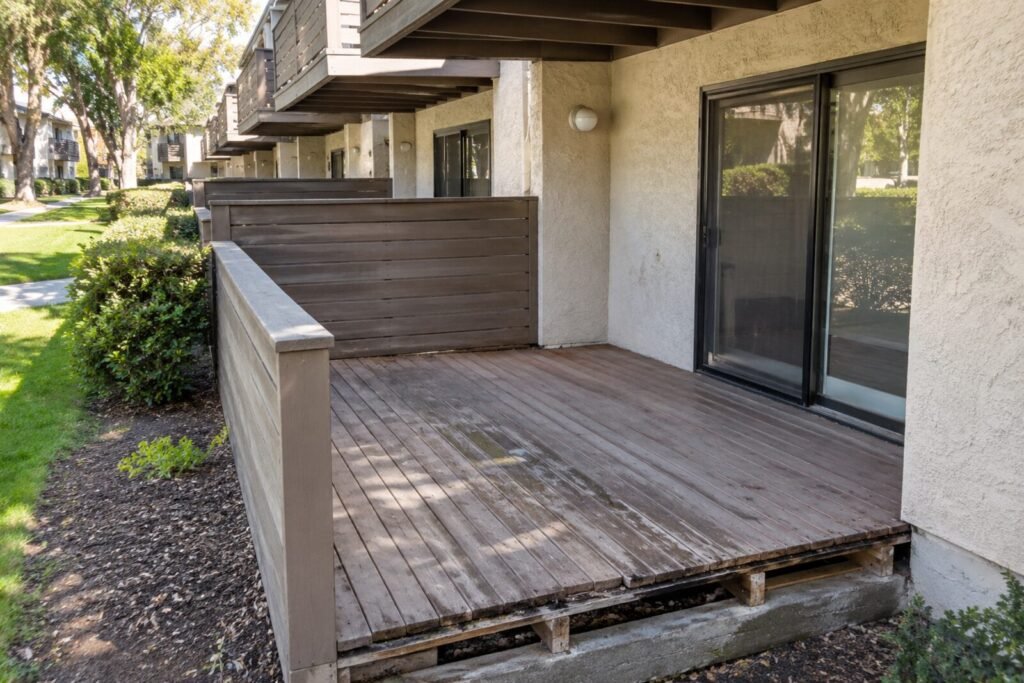
For most single-family homeowners a deck inspection is a maintenance decision. For multi-family property owners it is a statutory obligation. California deck inspections are governed by two laws passed after the 2015 Berkeley balcony collapse that killed six people and injured seven.
| SB 721 | SB 326 | |
|---|---|---|
| Applies To | Apartments and rentals with 3+ units | Condos and HOA-governed communities |
| Code Reference | Health & Safety Code §17973 | Civil Code §5551 |
| Elements Covered | Decks, balconies, stairways, walkways >6 ft above ground | Same |
| Who Can Inspect | Licensed contractor, architect or engineer | Licensed architect or structural engineer only |
| First Deadline | Jan 1, 2025 | Jan 1, 2025 |
| Repeat Cycle | Every 6 years | Every 9 years |
| Invasive Testing | 15% minimum of each element type | Random statistically significant sample |
| Report Filed With | Local enforcement agency | HOA board of directors |
Not sure which applies to your property? See our SB 721 and SB 326 pages, or contact us and we will confirm your requirements.
New construction and structural alterations are a separate matter. Deck permit inspections are performed by your local building department at defined hold points — typically the footing or pier before concrete is placed, the framing and connection hardware before anything is covered, and a final inspection once railings and stairs are complete. We build to those hold points and coordinate the scheduling, so nothing gets buried before the inspector sees it.
Failed Deck Inspection? Here's What Happens Next
A failed deck inspection is not a demolition order. In most cases the deficiencies fall into a handful of predictable categories, and the fix is far smaller than owners expect.
- Ledger and flashing rebuild — the most common finding, and usually repairable without touching the rest of the frame
- Hardware replacement — correct hangers, through-bolts and lateral connectors retrofitted to current code
- Footing repair or replacement — new piers set beside the failing ones, with the frame temporarily supported
- Guardrail reconstruction — new posts and anchorage to meet height, spacing and lateral load requirements
- Selective framing replacement — rotted joists sistered or swapped out, decking reinstated
- Full replacement — recommended only when the cost of repair approaches the cost of building new
If a deck is unsafe to occupy, we say so in writing on the day of the inspection and tell you how to secure it. Everything else is scoped, priced and prioritized. Handling deck inspection and repair under one license means the findings translate directly into a repair plan, with no second opinion needed and no gap between diagnosis and fix.
Deck Inspection Services We Provide
Residential Deck Safety Inspection
Full structural assessment for single-family homes, with a written report and photo documentation.
Pre-Purchase & Pre-Sale Inspection
An independent deck assessment for buyers, sellers and agents, scoped deeper than the deck section of a general home inspection.
SB 721 & SB 326 Compliance
Statutory California deck inspections for apartment buildings, condominiums and HOA communities, with compliance-ready documentation. HOA balcony inspection →
Structural Engineer Deck Inspection
Where a condition requires engineering analysis — undersized members, prior failure, planned load changes — we bring in a licensed structural engineer and deliver a stamped assessment.
Deck Inspection and Repair
Diagnosis and correction under one CSLB license, from ledger rebuilds and hardware retrofits to complete reconstruction.
Permit Support & Re-Inspection
Plan coordination, scheduling around deck permit inspections, and re-inspection documentation once corrective work is finished.
Home Inspection vs. Professional Deck Inspection
A general home inspection deck review is a visual scan performed alongside forty other systems in a single visit. A dedicated deck inspection is a structural assessment of one system. The difference shows up in what gets found.
| Home Inspection (deck portion) | Professional Deck Inspection | |
|---|---|---|
| Time on the deck | 10–20 minutes | 1–3 hours |
| Ledger and flashing | Visible surfaces only | Probed, opened where needed |
| Footings | Noted if visible | Depth, size and bearing assessed |
| Hardware | Spot-checked | Type, pattern and corrosion verified |
| Moisture testing | Rarely | Standard on suspect areas |
| Code compliance | General comments | Cited to specific code sections |
| Output | A paragraph in a larger report | A standalone deck inspection report |
| Repair path | Referral to a contractor | Scope and estimate from the inspecting contractor |
Deck Inspection Near Me — Where We Work
If you are searching for a professional deck inspection near me from anywhere in the Sacramento region, we are within service range. Our crews cover Sacramento and the surrounding communities including Arden-Arcade, Carmichael, Citrus Heights, Davis, El Dorado Hills, Elk Grove, Fairfield, Folsom and the wider Sacramento Valley, with regular work in the Bay Area for multi-family compliance projects.
Same-week scheduling is normal for single-family decks. Multi-unit properties are scoped and calendared around resident access. See all service areas →
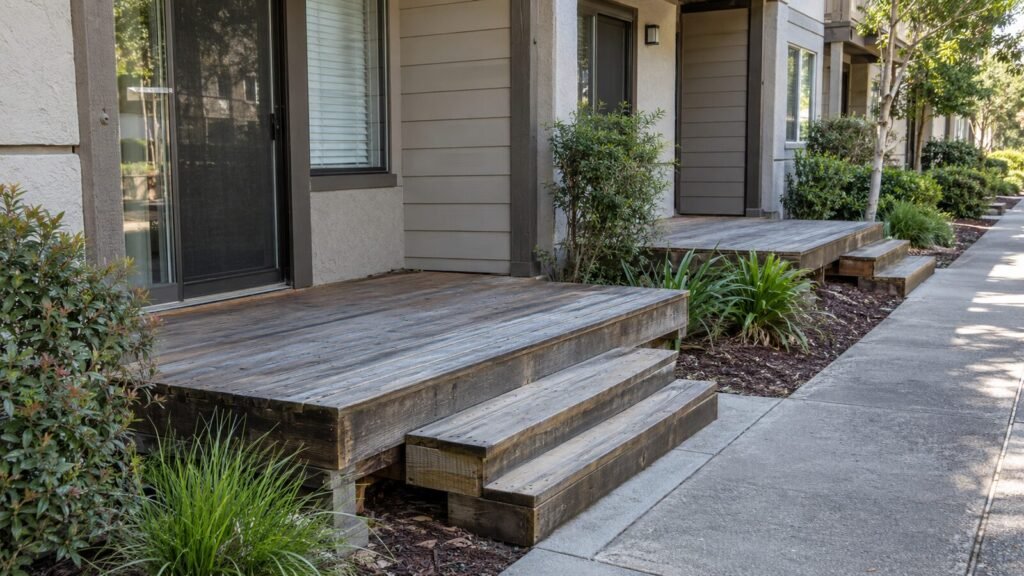
Deck Inspections in the Field
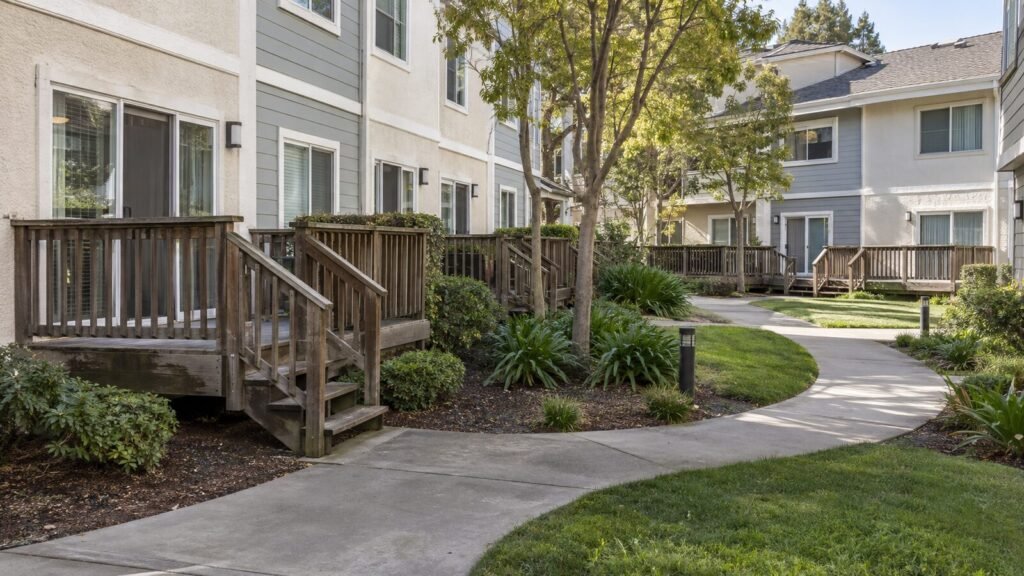
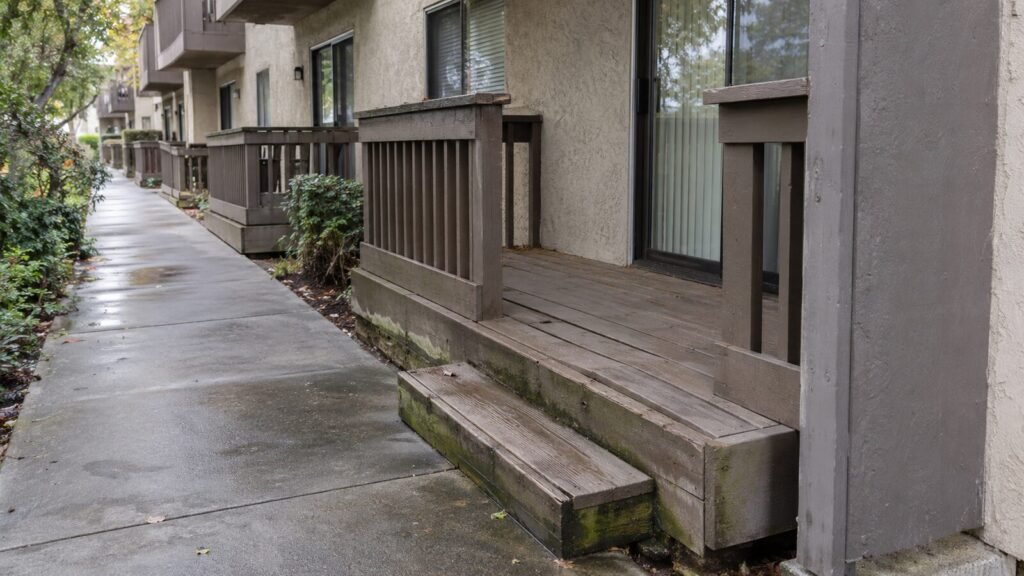
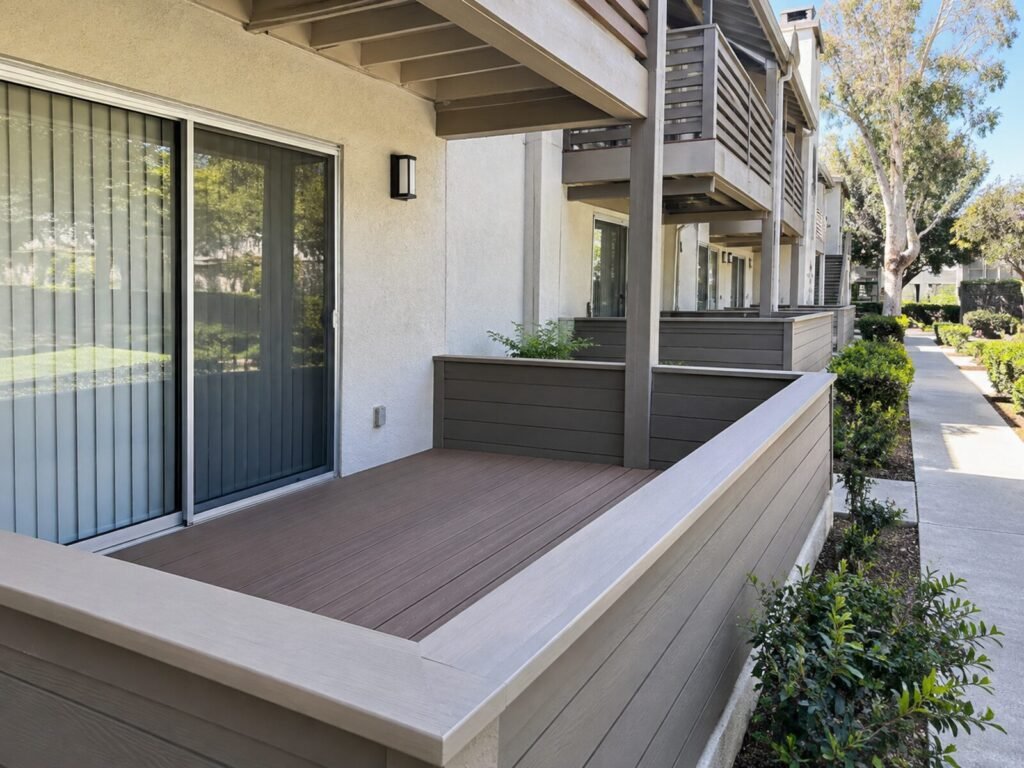
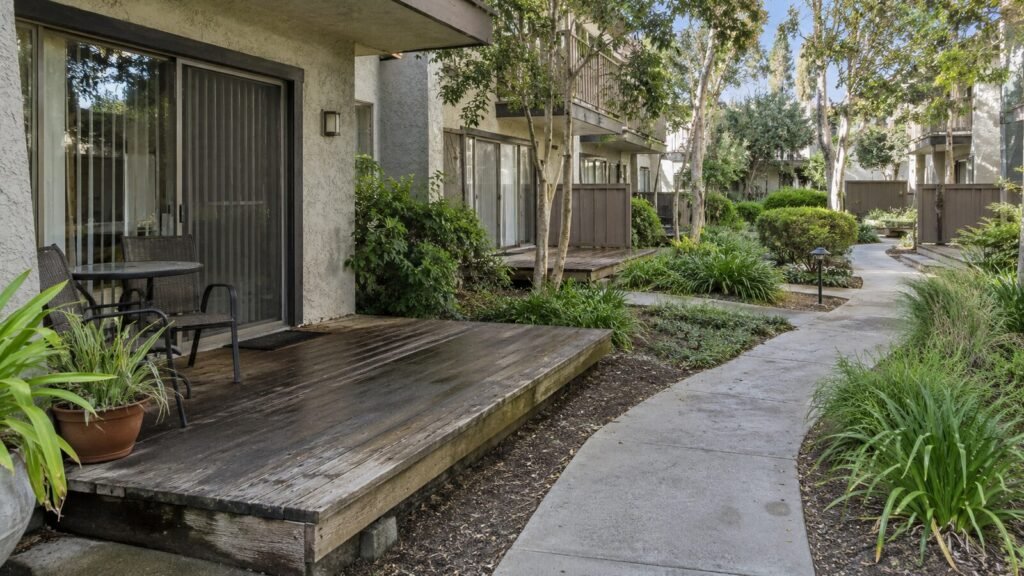
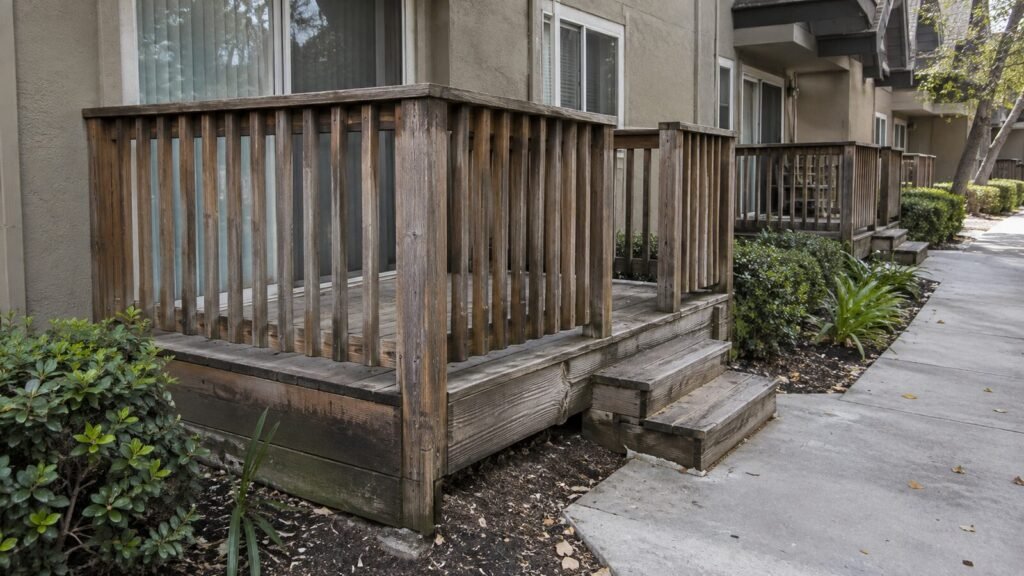
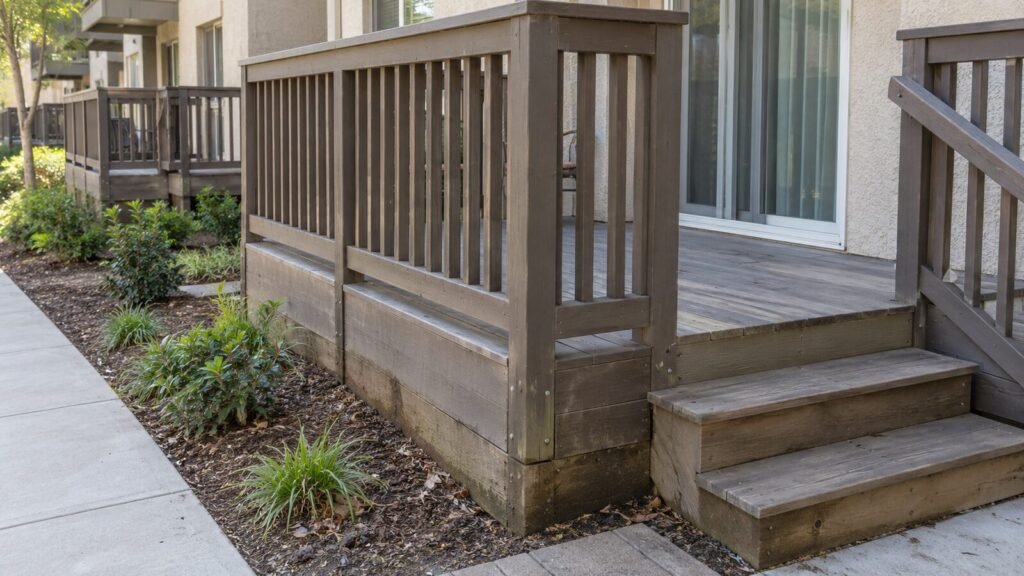
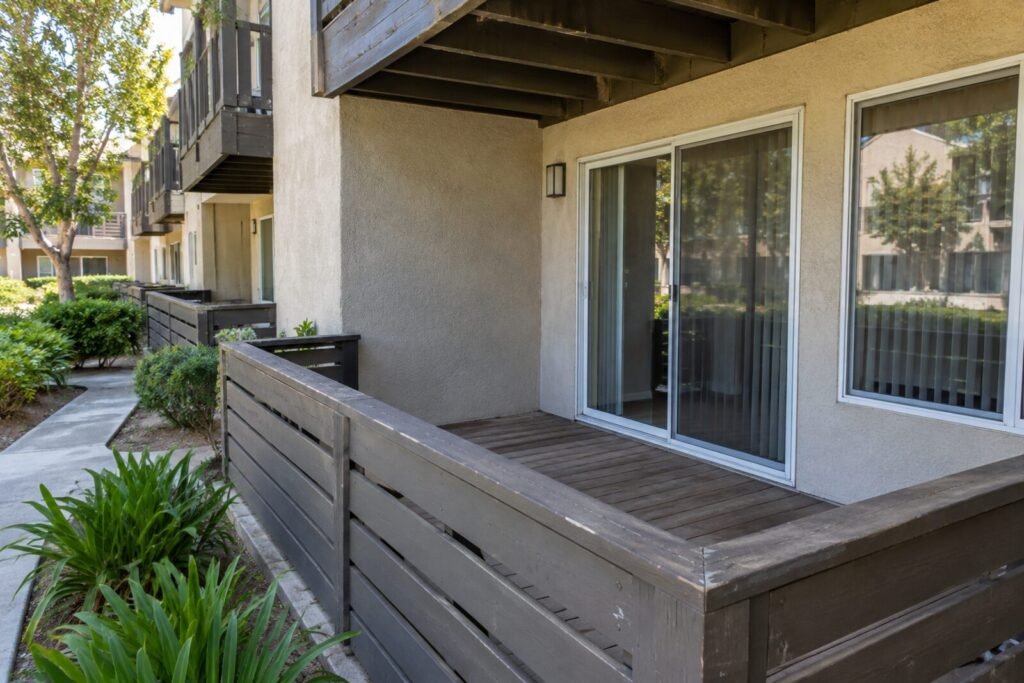
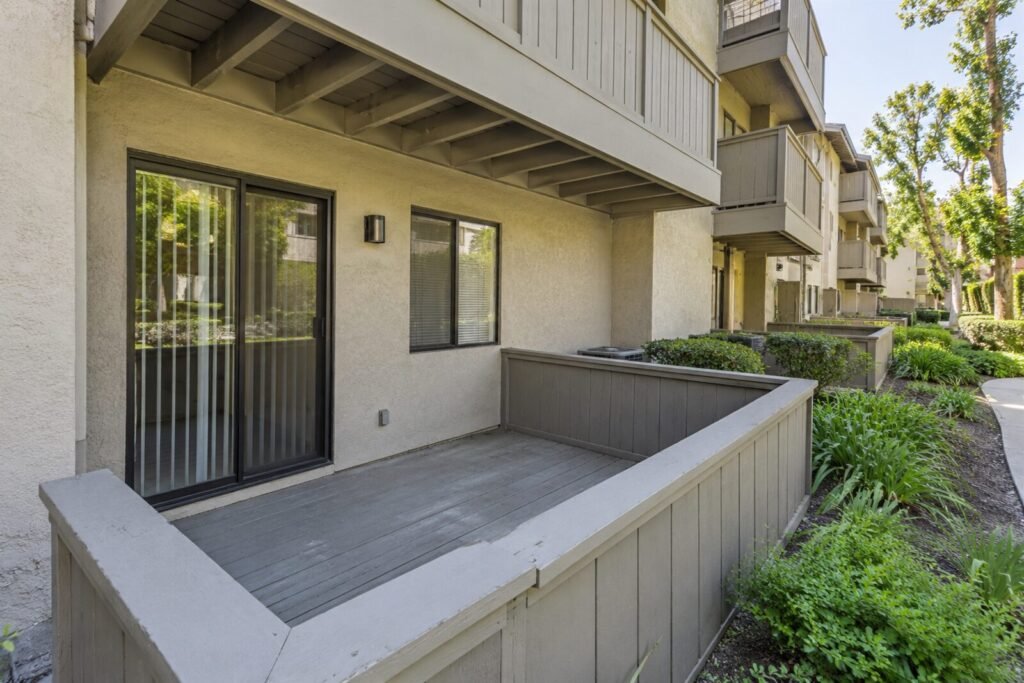
Patio decks, steps and railings on the Sacramento properties we inspect and repair.
Deck Inspection Questions
How often should a deck be inspected?
Walk your deck yourself every spring, and book a professional deck inspection every three to five years — annually once the structure passes twenty years old, or immediately after any event that loaded it heavily. Apartment and HOA properties follow the statutory cycles instead: six years under SB 721, nine years under SB 326.
What does a deck inspection cost?
It depends on size, height, construction type, access and how much probing the condition of the deck requires. We quote in writing before starting and credit the inspection fee toward repair work if you hire us to complete it. Call 916-269-5277 for a free estimate.
How long does a deck inspection take?
One to three hours for a typical single-family deck, including probing and photo documentation. Multi-level structures, enclosed framing and multi-unit properties take longer, and the deck inspection report is delivered afterward rather than on site.
Does a home inspection cover the deck?
Partially. A general home inspection deck review is a brief visual check within a much larger scope — it will catch a rotten board or a loose rail, but it is not designed to evaluate ledger attachment, footing adequacy or concealed framing. If the deck is elevated, over living space, or more than fifteen years old, a dedicated deck safety inspection is the better instrument.
What is checked during a deck footing inspection?
Footing size and bearing depth, the soil the footing sits on, evidence of settlement or heaving, the post base hardware, and whether posts are held clear of standing moisture. On existing decks this often requires excavating a small area beside a pier, since the critical dimensions are below grade.
Do I need a structural engineer deck inspection?
Not usually. A licensed contractor or certified inspector can assess and correct the great majority of residential deck conditions. An engineer is warranted when members appear undersized for their span, when there has been a partial failure, when you intend to add significant load such as a hot tub or roof, or when SB 326 requires it for an HOA property.
What happens after a failed deck inspection?
You receive a written scope identifying each deficiency, its code reference and its priority. Anything constituting an immediate hazard is flagged on the day and the deck should be taken out of service until it is corrected. Everything else is scheduled. Because we provide deck inspection and repair together, the report converts straight into a repair plan.
Do you handle deck permit inspections?
We build and repair to code and coordinate with the local building department at each hold point — footing, framing, and final. The municipal inspector performs the official permit inspection; we make sure the work is ready and correctly sequenced for it.
Do you perform bridge deck inspection?
No. Bridge deck inspection is a public infrastructure discipline governed by the National Bridge Inspection Standards and performed by Caltrans-qualified teams. Our deck inspection services cover residential, apartment and HOA structures.
Can I get a deck inspection before buying a house?
Yes, and it is one of the better uses of the inspection contingency period. We inspect independently of the general home inspector, provide a standalone report you can attach to a repair request, and quote the corrective work so the numbers in the negotiation are real.
Book a Professional Deck Inspection Today
Decks fail at the connections, and the connections are the part you cannot see. Get a written assessment from a licensed team that can also fix what it finds.