HOA Balcony Inspection
in Sacramento
Engineer-led HOA balcony inspection and full-cycle HOA inspection services for condominiums, townhome communities and planned developments. The California deadline has passed — associations without a completed inspection face daily fines and personal liability for board members.
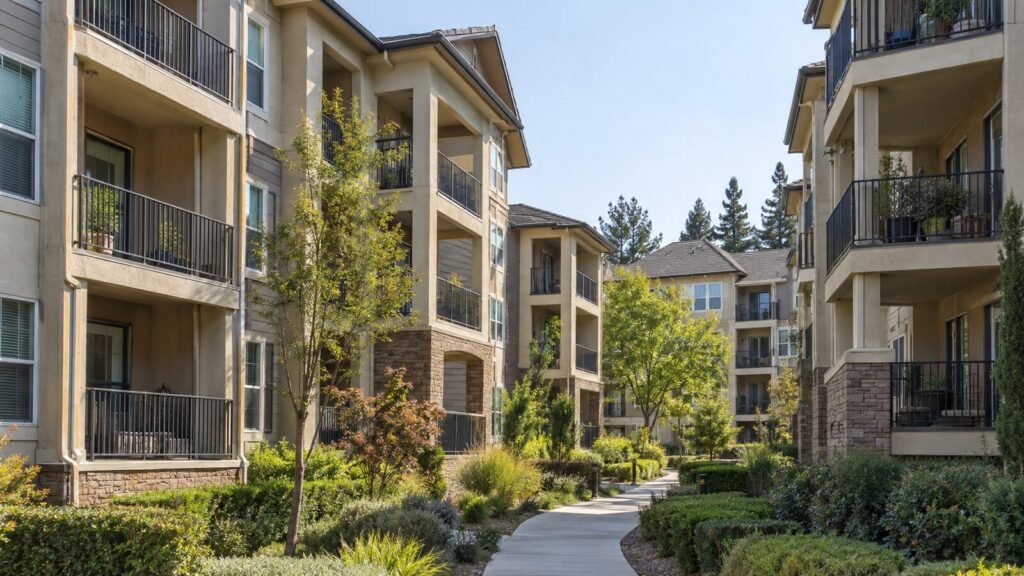
What Is an HOA Balcony Inspection?
An HOA balcony inspection is a structural safety assessment of every exterior elevated element in a common interest development — balconies, decks, landings, stairways, walkways and railings that sit more than 6 feet above ground and rely on wood or wood-based structural support. This is not a cosmetic walk-through. The assessment covers load-bearing capacity, waterproofing performance and the hidden framing behind the finish surface, because that is where failures begin.
The California HOA balcony inspection law is Civil Code Section 5551, adopted as SB 326 after the 2015 Berkeley balcony collapse that killed six people and injured seven. The statute places the obligation on the homeowners association rather than the individual owner, and it requires the work to be performed by a licensed architect or licensed structural engineer.
Who Must Comply?
- Condominium complexes governed by a homeowners association
- Townhome communities with shared exterior elevated elements
- Planned unit developments (PUDs) with common-area balconies, decks or walkways
- Any common interest development as defined by the Davis-Stirling Act
- Mixed-use condominium buildings with residential units above grade
The first HOA balcony inspection deadline under SB 326 was January 1, 2025. Associations that have not completed one are out of compliance right now. A board's fiduciary duty does not pause while directors look for a vendor — contact us today to schedule your inspection.
How Does an HOA Handle Inspection of Balconies?
Boards ask us the same question at the first meeting: how does an HOA handle inspection of balcony structures without disrupting residents or draining the budget? Under SB 326 the association carries five concrete obligations:
- Retain a qualified professional — a licensed architect or structural engineer, hired and paid by the association, not by individual owners
- Fund the work from operating or reserve accounts and account for it in the reserve study
- Provide access to every unit's balcony, including owner-exclusive-use areas, with proper written notice to residents
- Distribute the findings — the HOA inspection report must be shared with unit owners and retained for two inspection cycles
- Act on hazards — any element found to be an immediate threat must be taken out of service at once, with repairs initiated within 180 days
In short, how does an HOA handle inspection of balcony elements comes down to one principle: the homeowners association owns the process from the first quote to the final compliance record.
Other Inspection Services We Provide
The right inspection depends on who owns the building and where it stands. Every service is performed by the same licensed team, and repairs are handled in-house.
Apartment and rental buildings with 3+ units. Health & Safety Code §17973, every 6 years.
SB 326 InspectionCondominiums and HOA communities. Civil Code §5551, engineer-led, every 9 years.
SF Section 604San Francisco ordinance for metal balconies, walkways and fire escapes, beyond state law.
Deck InspectionFootings, ledger, framing and railings for homes, rentals and HOA properties.
Balcony InspectionStructural assessment under SB 721 and SB 326, with repairs handled in-house.
What Happens When an HOA Skips the Inspection
Boards that postpone the HOA balcony inspection are not saving money — they are converting a predictable expense into an unpredictable liability.
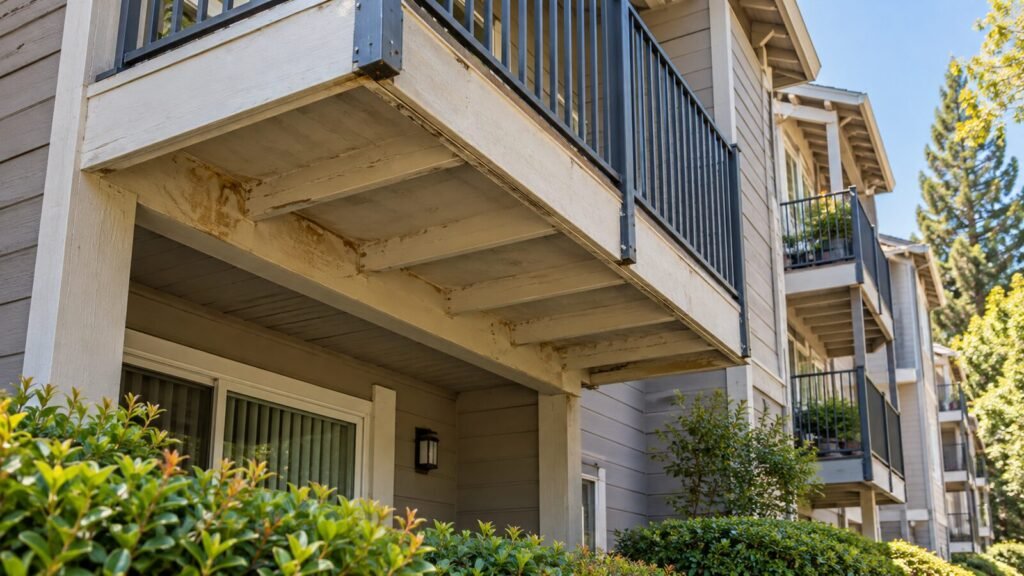
Civil penalties accrue for each day the homeowners association remains out of compliance with the inspection requirement.
Directors can be held personally liable for failing to fulfill their fiduciary duty to order an HOA compliance inspection.
Unit owners can sue the association for failure to maintain common-area safety and protect property values.
Carriers may deny claims, raise premiums or refuse to renew policies for associations with no current HOA inspection report on file.
Owner Responsible Repair or Association Repair?
This is the single most contested question after the report lands. In an HOA balcony inspection owner responsible repair dispute, the answer almost never depends on who uses the balcony — it depends on how the governing documents classify the element.
Structural framing, waterproofing membranes, ledgers and guardrail attachments are load-bearing components of the building shell, so in the overwhelming majority of California CC&Rs they belong to the homeowners association even when the balcony is exclusive-use common area. Surface finishes, planters, screens and anything the owner installed themselves are typically the owner's.
| Element | Usually Repaired By |
|---|---|
| Joists, ledgers, beams, posts | Association |
| Waterproofing membrane & flashing | Association |
| Guardrails, balusters, post anchorage | Association |
| Structural attachment to the building | Association |
| Deck coating / surface finish | Association (check CC&Rs) |
| Owner-installed tile, decking, hot tubs | Owner |
| Planters, screens, storage causing water damage | Owner |
| Damage from owner negligence or unapproved alteration | Owner |
Use the table as a first read, not a ruling: every HOA balcony inspection owner responsible repair decision has to be checked against your own recorded declaration.
How the Split Works
Our reports label every deficiency by element type so the board can map findings straight onto the CC&Rs. When an HOA balcony inspection owner responsible repair allocation is genuinely ambiguous, we document the failure mechanism — moisture path, point of origin, age of the damage — which is what an association's counsel needs to make the call defensibly.
How Our HOA Balcony Inspection Works
An engineer-led process built around how boards actually operate — quotes you can put in front of the membership, and access logistics that do not create a resident-complaint problem.
Board Consultation
We meet with the board or the property manager, count the exterior elevated elements, review the CC&Rs and access constraints, and issue a written quote with no hidden fees. Larger communities receive a phased proposal that fits the HOA inspection schedules already set for the fiscal year.
Engineer-Led Visual Assessment
A licensed structural engineer examines every balcony, deck, stairway, walkway and railing for water intrusion, dry rot, deflection, corroded hardware, insect activity and code violations. Each element receives its own condition rating.
Statistically Significant Invasive Testing
SB 326 requires opening a random, statistically significant sample of elements. Our engineer selects test locations for representative coverage, evaluates hidden joists, ledgers and flashing, then properly closes and reseals every opening.
Stamped HOA Inspection Report
The board receives an engineer-stamped HOA inspection report with photo documentation, per-element condition ratings, identified deficiencies, repair recommendations, cost ranges and priority timelines. It satisfies SB 326 filing and owner-disclosure requirements and drops directly into your reserve study.
Repair & Certification
If repairs are needed, our licensed construction team performs them in-house — from targeted fixes to full balcony reconstruction. Emergency conditions must be addressed within 180 days under SB 326. Once work is verified, we issue the compliance documentation for the association's permanent records.
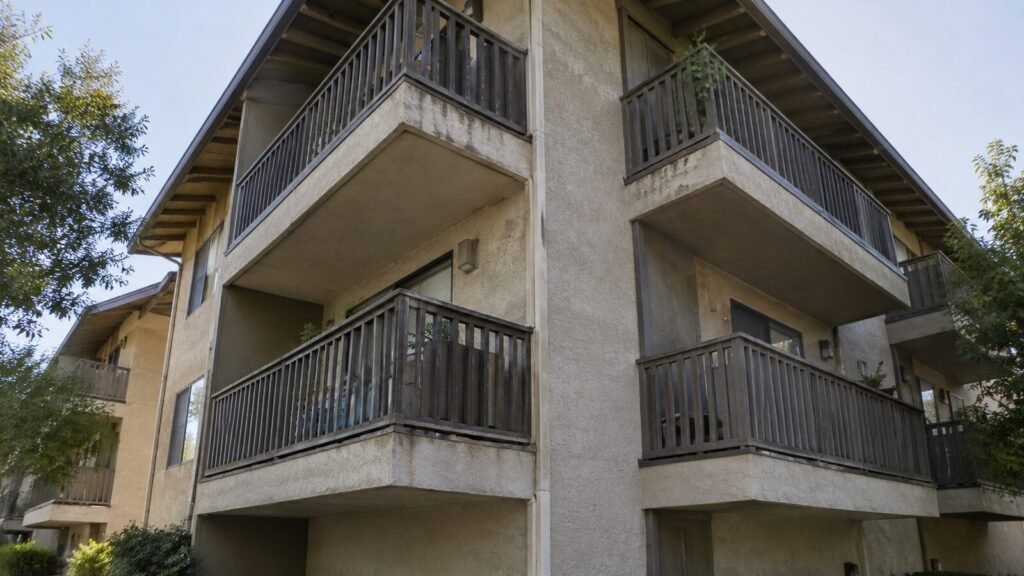
What We Inspect
Every HOA balcony inspection covers all exterior elevated elements more than 6 feet above ground that use wood or wood-based structural support.
Balconies
Load-bearing capacity, guardrail connections, waterproofing membranes, flashing details and structural attachment to the building.
Decks & Landings
Joists, ledger boards, post-beam connections, decking surface integrity and the condition of all fasteners and hardware.
Stairways
Stringer integrity, tread condition, handrail connections, landing structures, guardrail height and baluster spacing.
Walkways & Porches
Support posts, beam connections, surface drainage, waterproofing systems and overall integrity of elevated corridors.
Railings & Guards
Connection strength, height compliance, baluster spacing, post anchoring and resistance to lateral loading per current code.
Waterproofing
Membrane condition, flashing effectiveness, sealant integrity, drainage slope and evidence of moisture intrusion in protected areas.
HOA Inspection Services for California Associations
Most boards need more than a single report. Our HOA inspection services cover the full compliance picture for a homeowners association, so directors are not coordinating four separate vendors across three fiscal years.
SB 326 Balcony Compliance
The core HOA balcony inspection: engineer-led, invasive-tested, stamped and filed with the board. See SB 326 details →
SB 721 Inspections
For associations that also own or manage rental buildings with 3+ units under Health & Safety Code §17973. See SB 721 details →
Termite & Dry Rot Inspection
A termite inspection HOA boards can run alongside the structural scope, because rot and termite damage share the same moisture pathways.
Annual HOA Compliance Inspection
An interim walk-through between statutory cycles that catches deterioration early and documents due diligence — the cheapest evidence of board diligence available.
Reserve Study Support
Condition data and cost ranges formatted for your reserve analyst, so funding decisions rest on measured findings.
Repair & Reconstruction
In-house licensed construction, from single-balcony repairs to full building-line rebuilds, with one point of accountability.
Bundling HOA inspection services under one contractor also means one schedule, one set of resident notices and one file of documentation for the association's records. Property managers running several communities can put all HOA inspection services on a single master agreement and a single reporting format.
HOA Inspection Schedules: What's Due and When
Compliance is a calendar problem before it is an engineering problem. These are the HOA inspection schedules every homeowners association in California should be tracking.
| Interval | Requirement |
|---|---|
| Every 9 years | Full SB 326 HOA balcony inspection by a licensed architect or structural engineer |
| Within 180 days | Repairs initiated on any element identified as an immediate hazard |
| Immediately | Elements found unsafe must be taken out of service until repaired |
| Annually (recommended) | Interim HOA compliance inspection and visual walk-through |
| Every 3 years | Reserve study update incorporating the latest inspection findings |
| Two full cycles | Retention period for each HOA inspection report |
| At transfer of ownership | Disclosure of the most recent report to prospective buyers |
Associations built after January 1, 2020 must complete their first inspection within six years of the certificate of occupancy — worth confirming before you assume the nine-year clock applies. The California HOA balcony inspection law sets the outer limits; everything else on the list above is what a well-run board layers on top of it. We help directors map these HOA inspection schedules against the fiscal calendar so inspections and reserve contributions line up instead of colliding, and we keep a copy of your HOA inspection schedules on file so the next cycle does not arrive unannounced.
We will check your last inspection date and map the next one against your fiscal year.
Termite Inspection for HOA Communities
A structural engineer documents that a joist has lost section. A termite inspection HOA boards order at the same time explains why. Subterranean termites and wood-destroying fungi follow the same moisture path that causes dry rot, which is why the two conditions are so often found in the same balcony bay.
Running a termite inspection with the HOA balcony inspection has three practical advantages: one mobilization instead of two, one set of resident access notices, and a single repair scope that addresses both the structural damage and the infestation that caused it. Repairing framing without treating an active colony simply resets the clock on the same failure.
For associations in Sacramento's older wood-frame condo stock, we recommend a termite inspection HOA-wide on the same cycle as the structural assessment, with interim checks in any building where prior activity was documented. A termite inspection HOA directors order preventively costs far less than the framing replacement that follows an undetected colony, and the findings slot into the same reserve study line item as the balcony work.
HOA Balcony Inspection (SB 326) vs. Apartment Inspection (SB 721)
Both laws address balcony safety, but they apply to different property types and set different requirements.
| SB 326 — HOA / Condo | SB 721 — Apartments | |
|---|---|---|
| Applies To | Condos, townhomes, HOA communities | Apartments (3+ units) |
| Code Reference | Civil Code §5551 | Health & Safety Code §17973 |
| Who Can Inspect | Licensed architect or engineer only | Licensed contractor, architect or engineer |
| First Deadline | Jan 1, 2025 | Jan 1, 2025 |
| Repeat Cycle | Every 9 years | Every 6 years |
| Invasive Testing | Random statistically significant sample | 15% minimum of each type |
| Report Filed With | HOA board of directors | Local enforcement agency |
| Who Funds It | The homeowners association | The building owner |
Not sure which law applies to your property? Contact us and we'll confirm your compliance requirements — many mixed portfolios need both. See also our SB 326 and SB 721 pages.
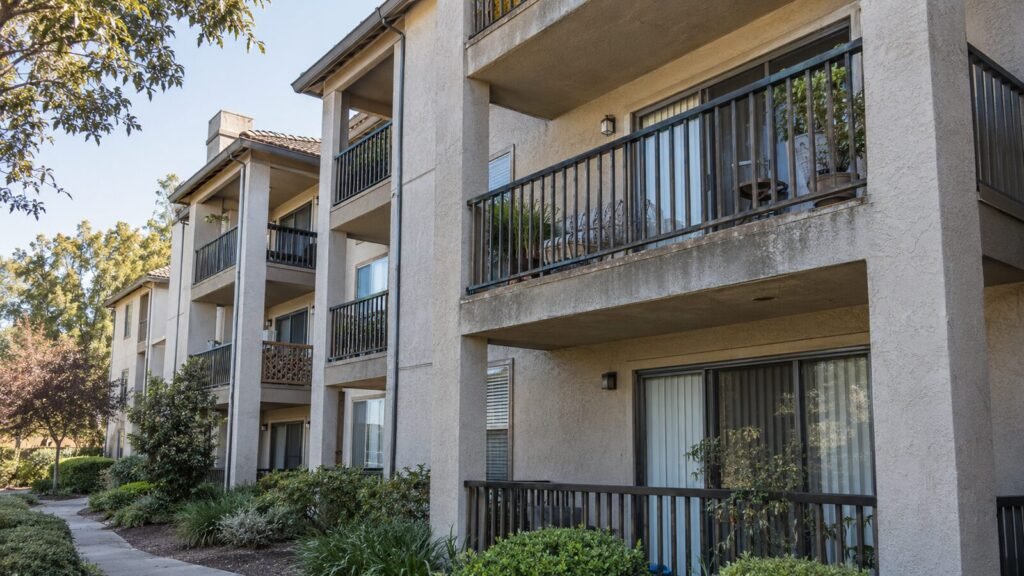
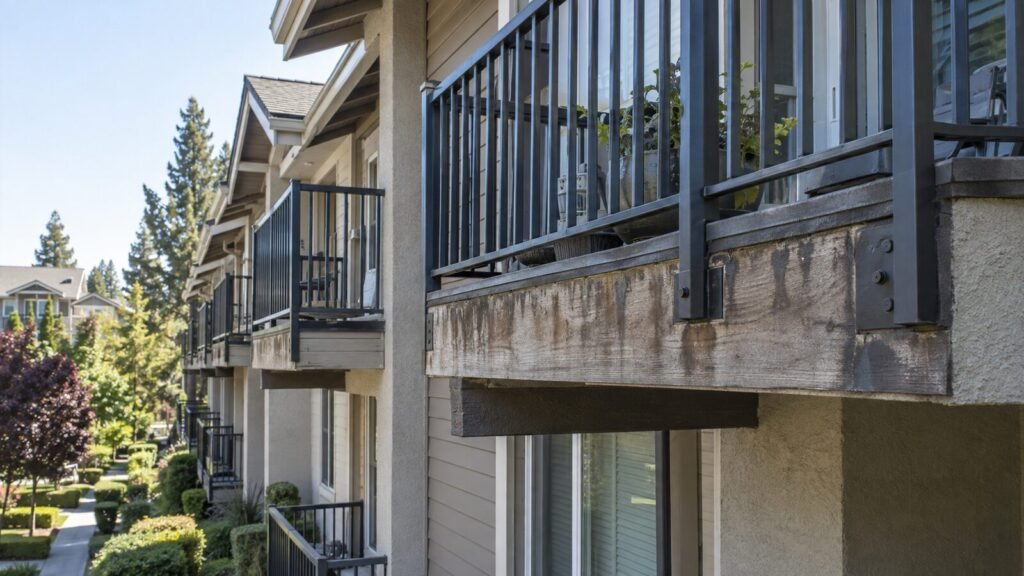
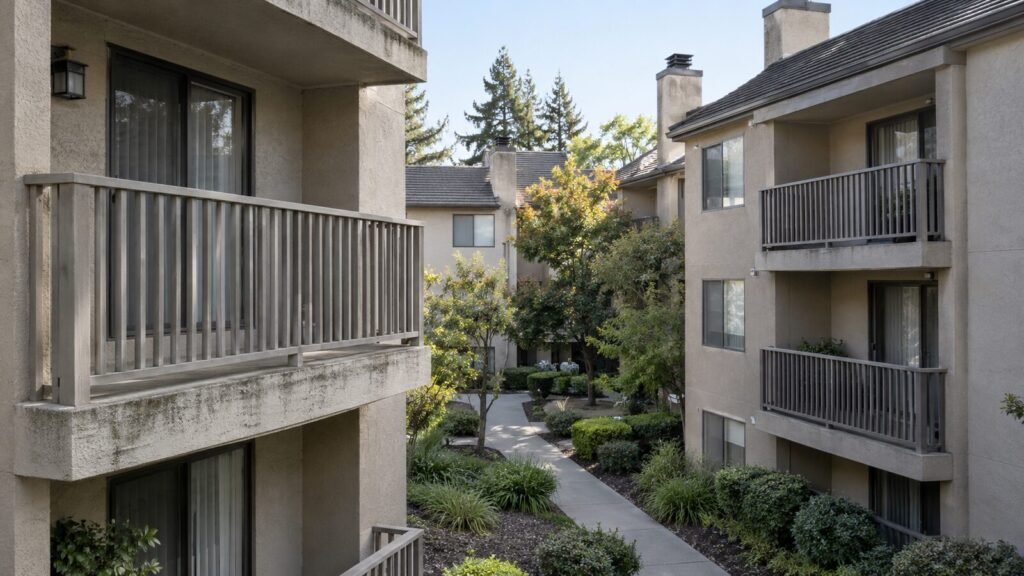
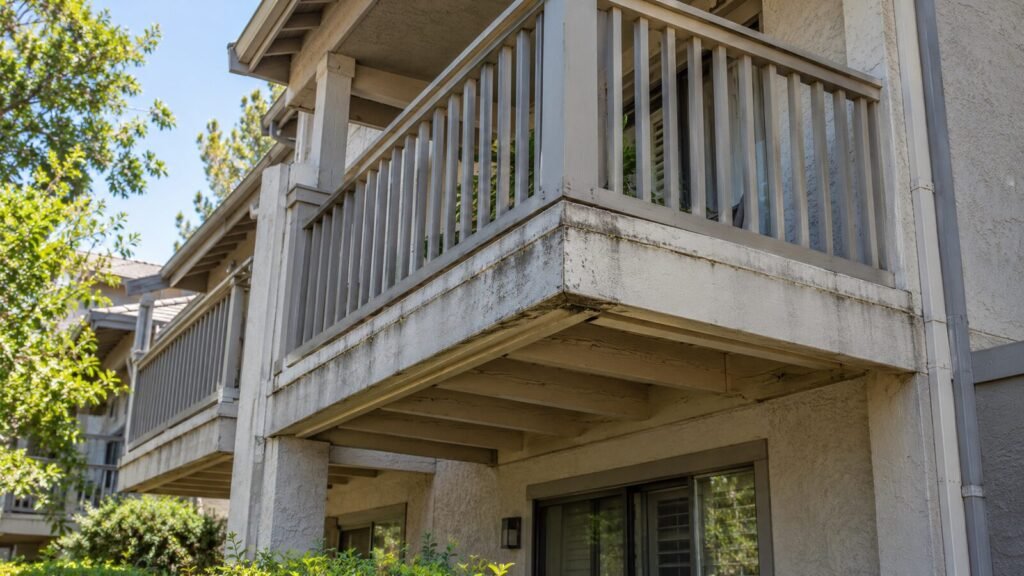
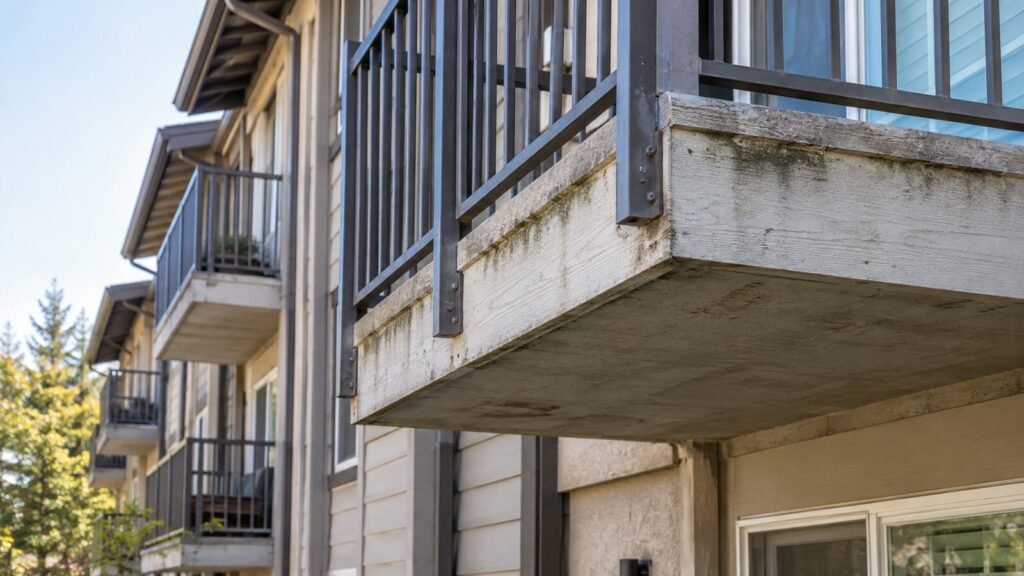
HOA Balcony Inspections in the Field
Condominium and townhome balconies our engineers assess for Sacramento-area associations.
HOA Balcony Inspection Questions
What is an HOA balcony inspection?
It is a structural safety assessment of all exterior elevated elements in a common interest development — balconies, decks, stairways, walkways and railings more than 6 feet above ground with wood or wood-based support. A licensed architect or structural engineer performs a visual assessment plus invasive testing of a random sample, then issues a stamped report to the board.
What is the California HOA balcony inspection law?
The California HOA balcony inspection law is Civil Code §5551, enacted as SB 326 and effective January 1, 2020. It requires every homeowners association with exterior elevated elements to complete an inspection by January 1, 2025 and every nine years thereafter, to share findings with unit owners and to fund necessary repairs through the association.
How does an HOA handle inspection of balcony structures in practice?
The board retains a licensed architect or structural engineer, approves the scope and budget, issues written access notices to residents, and coordinates entry for both the visual assessment and the invasive testing. After the HOA inspection report is delivered, the board distributes it to owners, folds the repair costs into the reserve study, and starts any emergency repairs within 180 days.
Who is responsible for repairs — the owner or the association?
In any HOA balcony inspection owner responsible repair question, the CC&Rs govern. Structural framing, waterproofing, guardrails and building attachment are almost always the association's responsibility, even for exclusive-use common area. Owner-installed finishes, planters and alterations, plus damage caused by owner negligence, generally fall to the unit owner.
What's included in the HOA inspection report?
Photo documentation of every element, individual condition ratings, a description of each deficiency and its likely cause, invasive test locations and findings, prioritized repair recommendations with cost ranges, and the engineer's stamp. It meets SB 326 disclosure requirements and is written to be usable by the board, the reserve analyst and the membership.
How often are inspections required?
Every nine years under SB 326. Buildings completed after January 1, 2020 must be inspected within six years of the certificate of occupancy. We also recommend an annual HOA compliance inspection between statutory cycles — it costs a fraction of the full assessment and catches deterioration while repairs are still small.
What other HOA inspection services do you provide?
Alongside the SB 326 assessment we offer SB 721 inspections for rental buildings, wood-destroying organism testing, annual HOA compliance inspection walk-throughs, reserve study support and in-house repair construction. Boards that consolidate HOA inspection services with one licensed contractor deal with one schedule, one invoice and one accountable party.
Does the inspection include a termite inspection?
Structural inspection and termite inspection are separate scopes, but we run them together on request. Termite inspection HOA boards schedule alongside the balcony assessment saves a second mobilization and produces one combined repair scope covering both the damage and its cause.
How much does an HOA balcony inspection cost in Sacramento?
Cost depends on the number of units, the quantity and accessibility of elevated elements, and how much invasive testing the sample requires. Because SB 326 mandates a licensed engineer, pricing differs from a standard SB 721 assessment. We provide free, no-obligation estimates — call 916-269-5277 for a quote tailored to your association.
SF condos and HOAs must also comply with Section 604 — a local ordinance covering metal structures and fire escapes that SB 326 does not address. An HOA balcony inspection under state law alone is not enough. Learn about Section 604 →
Protect Your Board. Schedule Your HOA Balcony Inspection.
The SB 326 deadline has passed. Book an engineer-led inspection now to protect your directors, your residents and your property values — and ask about bundling the rest of your HOA inspection services into the same visit.