Structural Repair
- Joist, beam, and rim replacement
- Ledger board reinforcement and re-flashing
- Connection hardware upgrades
- Support post and deck footing reconstruction
Solano County · SB 721 & SB 326 specialists
Dixon is mostly a city of single-family homes, and multifamily buildings make up only about 18% of its housing. That means many apartment owners, condo associations, and small landlords here may be handling SB 721 or SB 326 for the first time. We inspect fourplexes, apartment complexes, and townhome communities across Dixon, from the older blocks around downtown and Jackson Street to the neighborhoods along Pitt School Road, Stratford Avenue, and West H Street. Each inspection ends with a clear report, and our own crew carries out the balcony repair or deck repair.
Inspection, compliance, repair, and reconstruction for Dixon apartment owners, HOA boards, and property managers — handled end‑to‑end by one licensed team.
What type of property do you manage?
Which exterior structures are 6 feet or more above ground?
Select all that apply
Get your free compliance assessment
We'll send your personalized report within 24 hours
Thank you! We'll contact you within 24 hours with your personalized compliance report.
Dixon's population grew from 7,541 in 1980 to 16,103 in 2000, and much of its housing has been built in the last 30 years. Many of the multifamily buildings from that growth are two-story, wood-framed fourplexes, small apartment complexes, and townhomes with balconies and exterior stairs. Older apartments are concentrated near downtown. On both, our deck inspection checks how stiff the framing is, how the posts and connections carry the load, and whether surface paint is hiding water damage underneath.
Concrete in Dixon is mostly at ground level, but it still affects elevated elements. Brick and concrete planters are sometimes built right against stair stringers and balcony posts. The planter holds wet soil and irrigation water against the wood day after day, and the post or stringer softens at the soil line. We check every planter that touches a covered element and suggest separating the wood from the soil.
Composite boards on Dixon balconies are usually laid end to end where one board meets the next. Most manufacturers require a double joist or blocking under each of these butt joints, so both board ends are fully supported and fastened. Without it, the ends lift, separate, and become a trip hazard. We check butt joints on composite decks in the sample and the framing below them.
A 30-minute on-site walkthrough tells you exactly what's required.
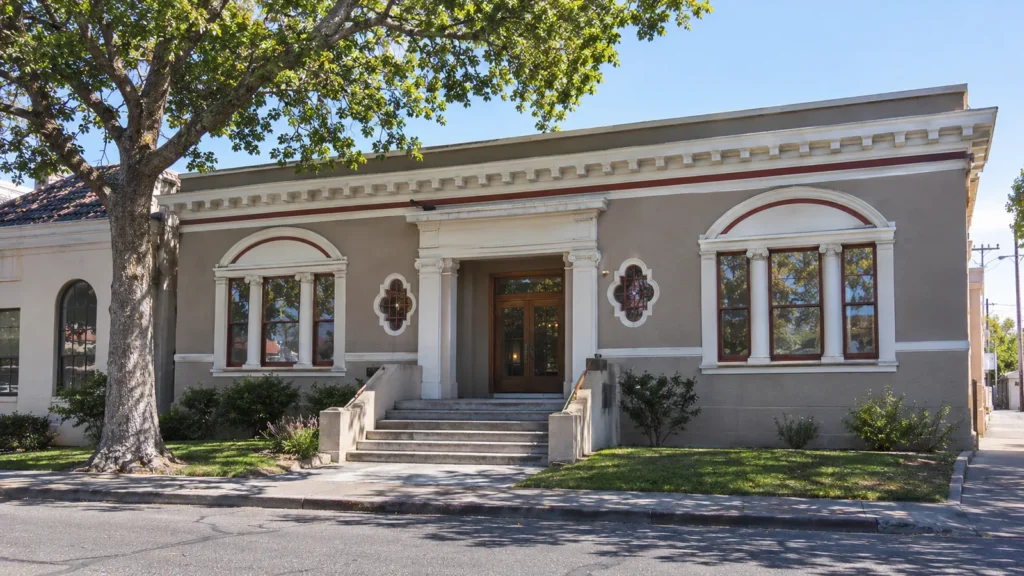
Dixon was established in 1868 on land Thomas Dickson donated for the California Pacific Railroad. The nearby town of Silveyville moved to join it: buildings were rolled about three miles on logs, pulled by teams of men and horses, and by 1871 every movable building in Silveyville had reached Dixon. The Methodist Church at Jackson and B Streets is the only building from that move still standing. The city incorporated in 1878, and today the Dixon Carnegie library is listed on the National Register of Historic Places.
Dixon stayed small for a long time, with 1,714 residents in 1950, then grew quickly to 18,988 at the 2020 Census. It has 6,554 housing units, and 34.1% of occupied homes are rented. The City's housing element reports that single-family homes make up about 81% of the stock and multifamily buildings about 18%, that most housing is in relatively good condition, and that about 5% needs repair, mainly older homes near downtown. The same plan calls for 416 additional homes over the 2023–2031 cycle. With a small multifamily stock, many Dixon owners are managing an SB 721 or SB 326 inspection for the first time.
Dixon lies on flat ground in the Sacramento Valley, between Davis and Vacaville along Interstate 80, and has a hot-summer Mediterranean climate: dry, hot summers and mild winters with most of the year's rain. With open farmland around the city, many balconies and stairs here get direct sun from spring to fall. Sun-faded paint and coatings are often repainted rather than repaired, which is why surface condition alone says little about the wood underneath.
Issues that repeat across the local building stock — from climate, construction era, or common materials in this area.
Before a sale, a new lease-up, or a City visit, balconies and stairs are often repainted. Paint can fill checks and cover stains, so a soft, water-damaged joist end or stair tread looks sound. We probe painted wood at the places where water damage usually starts, rather than judging it by the finish.
Some second-floor walkways and balconies feel springy underfoot. Bounce usually means the joists are undersized for their span, the blocking between them is missing, or water damage has already weakened them. Excess movement also cracks coatings and sealant. We check deflection on walkways in the sample and look at joist size, spacing, and blocking.
Posts that are too small for their height or load can bow, twist, or crush at the top where the beam sits on them. This is more common on older stairs and on balconies that were extended after the building was finished. We check post size and condition against the load each post carries.
Wood treads that slope back toward the riser, or that have cupped over time, hold a pool of water after rain. The water soaks into the tread and down into the stringer at each step. We look at tread slope and cupping on stairs in the sample and replace treads that trap water.
Residents or past owners sometimes attach patio covers, awnings, or shade structures to a balcony's beam or guardrail. These add weight and wind load that the balcony framing was not designed to carry, and each screw through the beam or membrane can let water in. We note every attached cover and advise removal or proper engineering where it is needed.
Dixon rentals with at least three units must have an SB 721 inspection every six years. We work with fourplexes and with small and mid-sized complexes, explain each step in plain terms, arrange tenant notices, and keep the report focused on what needs to be done.
For Dixon condo associations, SB 326 sets a nine-year cycle. Only a licensed structural engineer or architect may sign the inspection, and the sample is picked at random from whatever balconies, decks, and stairs the CC&Rs put in the association's care.
HOA boards in Dixon, as everywhere, are run by volunteer owners. Our report is written so a board without a building background can read it: findings by building, photos for each item, and repairs ranked by safety and cost. We also file the permits and prepare the board's final compliance letter.
Three- and four-unit buildings, small apartment complexes, townhome communities, senior housing, and older multifamily buildings near downtown.
Serving all of Dixon with fast response times. Most assessments within 3 business days.
After the work is complete, you walk away with a full archive package — ready for your HOA board, insurer, city, or next property sale.
Before, during, and after photos tagged to every structural element inspected.
Full permit package, inspection card sign-offs, and city correspondence archived.
Manufacturer warranties plus our labor guarantee in writing.
Detailed scope-of-work summary covering every repair and reinforcement.
Engineer-signed SB 721 / SB 326 letter for your HOA archive, insurance, and lender.
For first-time owners and small HOA boards in Dixon, the package also includes a one-page schedule with the due date of the following state inspection and which items to check each year in between.
We walk the property, identify scope, and flag any urgent safety items. No cost, no obligation.
Full proposal with line-item pricing, material specs, and a realistic timeline.
We handle city permits and coordinate tenant notices with property management.
One licensed crew, start to finish. Daily photo updates and clean worksites.
City sign-off, warranty package, and compliance letter delivered to you.
I own two fourplexes and had never heard of SB 721 until a neighbor mentioned it. ABD explained what applied, inspected both buildings, and found one stair with water-damaged treads under fresh paint. The repair was done in a day.
Our townhome board is all volunteers. ABD's report had photos for every item and a simple list of what to fix first, which made the board vote easy.
Yes. Building age does not matter; SB 721 covers any rental property with at least three units. For buildings permitted from 2019 on, the first inspection is due no later than six years after the certificate of occupancy; every other building follows the regular six-year cycle. Newer buildings can still have flashing, drainage, or connection problems from construction, and an early inspection catches them while they are small.
Yes. Paint can fill cracks and cover stains, and a soft, water-damaged tread or joist end can look like new from a few feet away. That is why we probe wood instead of judging it by its finish. If paint is planned, it is best done after the inspection and any repairs, not before.
Only if the attachment is designed for it. A typical balcony is framed to carry its occupants, not the weight and wind load of a small roof. Attaching one usually requires an engineered design and a building permit. During the inspection we note any existing covers and tell you whether they should be removed or reinforced.
In the wrong city? Jump to the right page for your property.
Tell us about your property and we'll come out, walk it, and give you a written plan — free of charge, no obligation.