Project Overview
- Service Type
- SB 721 Inspection · Structural Repair · Waterproofing
- Location
- Stockton, CA
- Property Type
- Garden-style apartment complex (88 units, 11 buildings)
- Timeline
- 4-day inspection · 18 working days repair
- Completed
- June 2026
Project at a Glance
The Problem
A resident leaned on a second-floor guard and felt it move. The management company called for an SB 721 inspection the same week, across a complex of eleven buildings with 44 balconies and 22 exterior stair landings.
The guards themselves were sound; the framing behind them was not. Posts had been through-bolted to rim joists with no flashing over the fastener heads, and two decades of water at those penetrations had turned the rim to punk wood over roughly a third of the property. Nineteen guards moved under a manual load check, and at four of them the fasteners pulled with hand pressure.
A guard that cannot hold its design load is an immediate threat under SB 721 — Health & Safety Code §17973 — which means the inspector notifies the owner and the local enforcement agency within 15 days, and the owner must restrict access straight away. We fenced the affected balconies within 24 hours of the load check and filed for permits while the report was still being written. Our structural repair service handled the rebuild.
The Solution
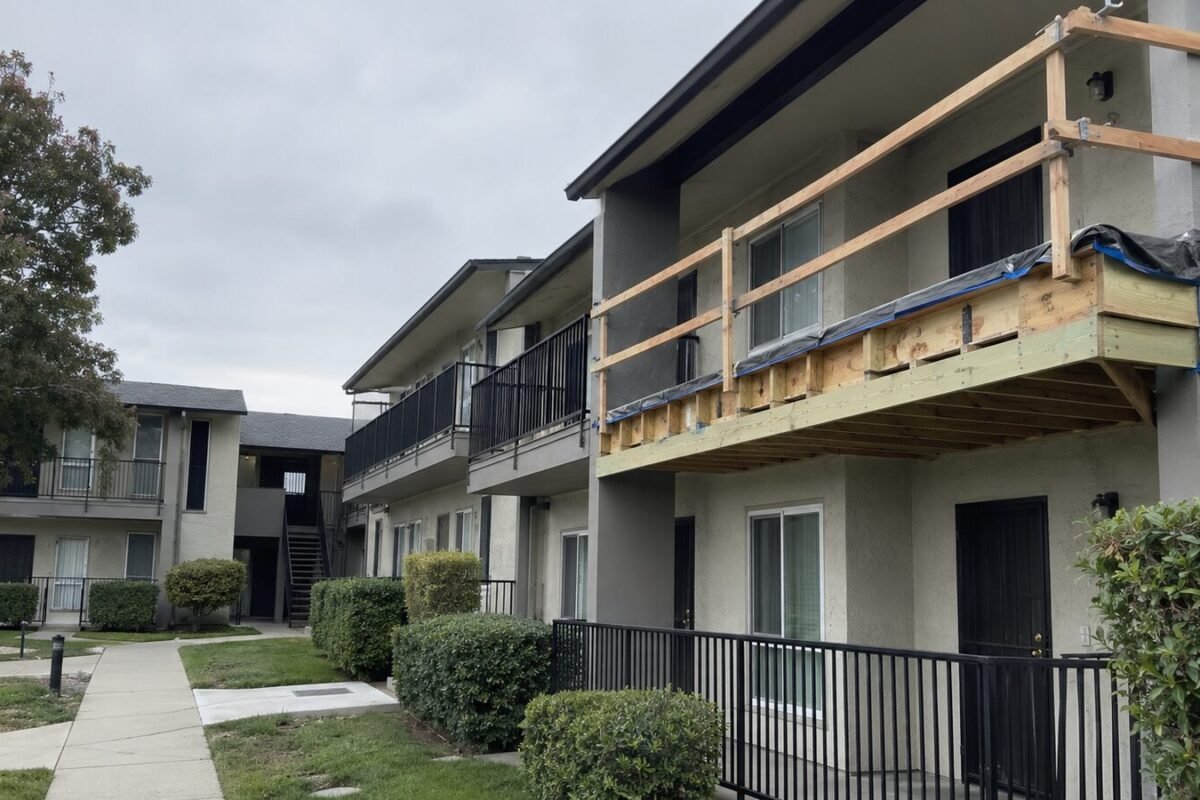
Affected balconies were fenced off and temporary guards installed at the stair landings so egress stayed open. We then worked building by building: coating and decking removed at the perimeter, rim joists and blocking cut out, and new pressure-treated members installed with Simpson Strong-Tie hardware sized for the guard loads.
Guard posts were re-set on new blocking with butyl and sheet-metal flashing concealed over every penetration, and the guards reinstalled at 42 inches with 4-inch maximum sphere spacing. The perimeter was re-waterproofed and tied back into the existing field coating. City re-inspections passed on the first visit at all eleven buildings.
- SB 721 inspection of 44 balconies & 22 stair landings
- Manual load checks on every guard
- Immediate-threat notice & temporary guarding within 24 hours
- Rim joist and post blocking replacement
- Guard post re-anchoring with flashed penetrations
- Perimeter waterproofing & coating tie-in
How the Project Ran
-
Inspection & load checks (Days 1–4)
All 66 elevated elements assessed; guards load-checked individually; nineteen failed and were documented with photographs and moisture readings.
-
Notice, guarding & permits (Days 5–8)
Immediate-threat notice issued to the owner and the local enforcement agency inside the statutory window; affected balconies fenced and temporary guards installed within 24 hours; permit applications filed.
-
Structural rebuild (Days 9–22)
Building by building: perimeter framing removed, rim joists and blocking replaced in pressure-treated Douglas fir, new connectors installed, guard posts re-set on flashed penetrations.
-
Waterproofing & sign-off (Days 23–26)
Perimeter membrane rebuilt and tied into the existing coating; city inspections passed at all eleven buildings; compliance file issued for the six-year cycle.
Materials Used
- Pressure-treated Douglas fir rim joists and guard post blocking
- Simpson Strong-Tie connectors hangers, straps and post base hardware
- Powder-coated steel guardrails 42-inch guards reinstalled to current code
- Westcoat ALX with butyl flashing perimeter membrane and concealed post-penetration protection
Before & After
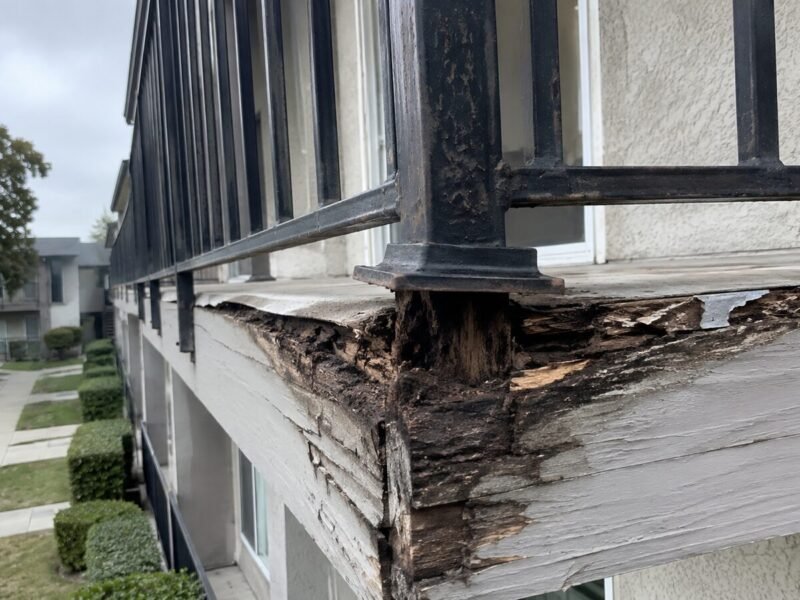
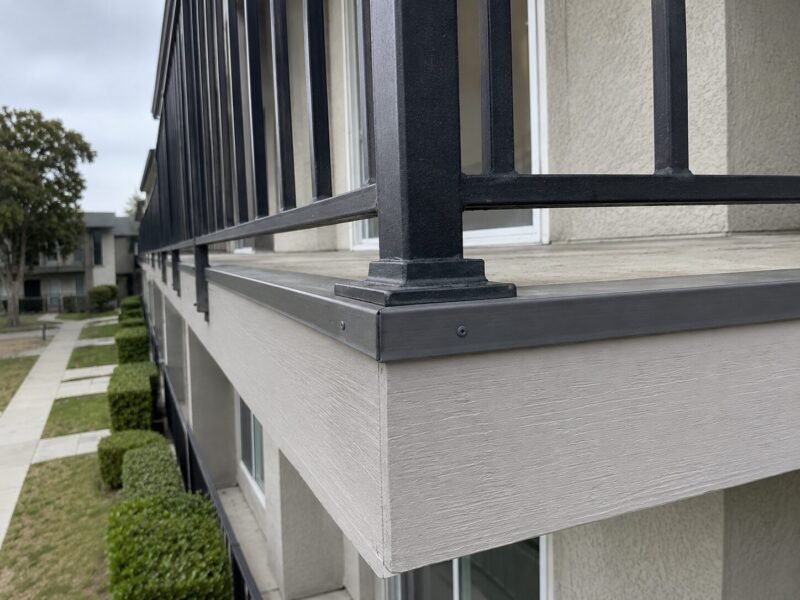
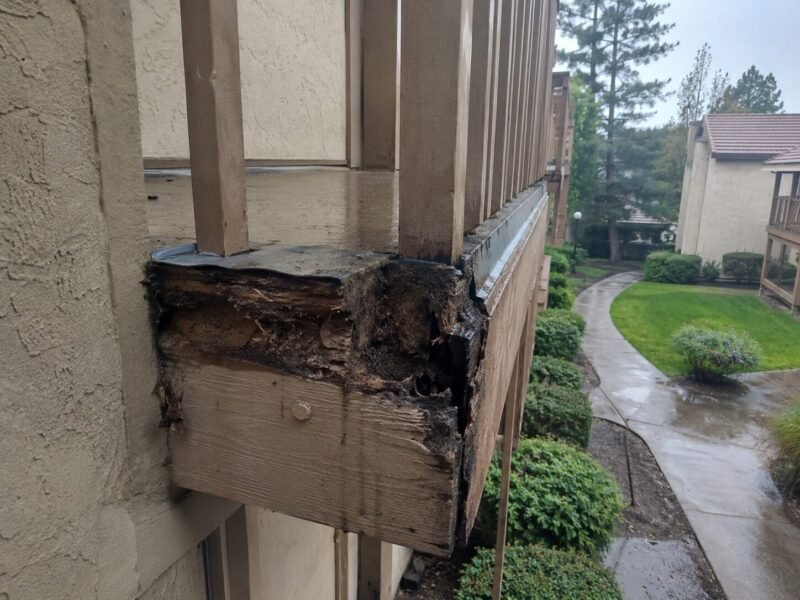
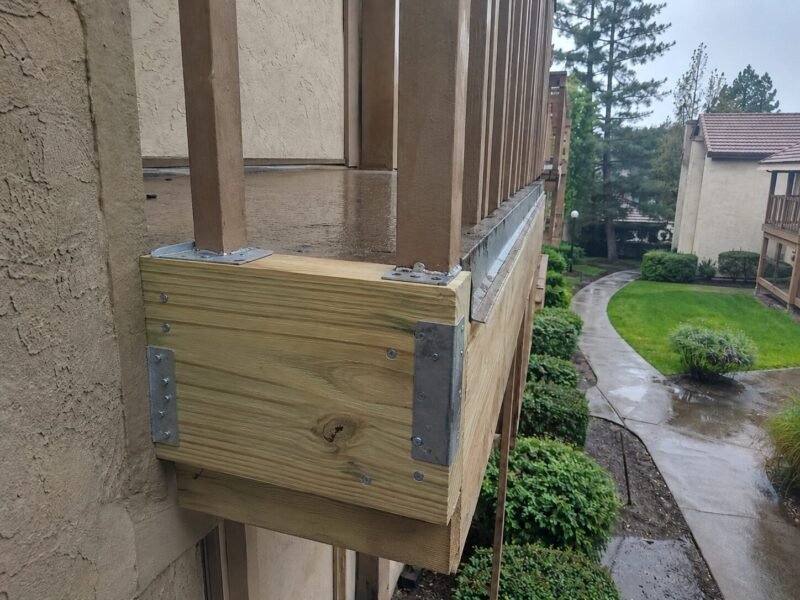
All nineteen guards rebuilt to code — every city re-inspection passed on the first visit.
Eighty-eight occupied units and a safety problem we didn't know we had. ABD had the bad balconies fenced by the next morning and worked one building at a time, so nobody was locked out of their own patio.
Questions About This Project
What happens when an inspector reports an immediate threat?
Under §17973 the inspector notifies the owner and the local enforcement agency within 15 days, and the owner must restrict access to the element right away — usually fencing or closure the same day. Emergency repairs are not held to the ordinary permit timeline; the obligation is to make it safe now.
Do we have to replace every railing on the property?
No. We load-check each guard and replace what fails, plus the framing behind it. On this project 19 of 66 elements needed work; the remaining 47 were documented as compliant in the same report.
How long do we have to complete non-emergency repairs?
For findings that are not an immediate threat, SB 721 gives the owner 120 days from receipt of the report to apply for a permit, and 120 days from permit issuance to complete the work — with extensions available from the local enforcement agency on a showing of good cause.