Project Overview
- Service Type
- HOA Balcony Inspection · SB 326 Inspection · Waterproofing
- Location
- Walnut Creek, CA
- Property Type
- Condominium association — 24 units, 3 two-storey buildings (built 1994)
- Timeline
- 2-day inspection · 5 working days repair
- Completed
- May 2026
Project at a Glance
The Problem
The board's first question was not about balconies. It was about money — specifically, whether the association would end up paying for damage caused by things owners had installed themselves. Two directors had heard different answers from different vendors, and the item had been tabled twice. An HOA balcony inspection answers that question in writing, which is why we started with the CC&Rs rather than the ladder.
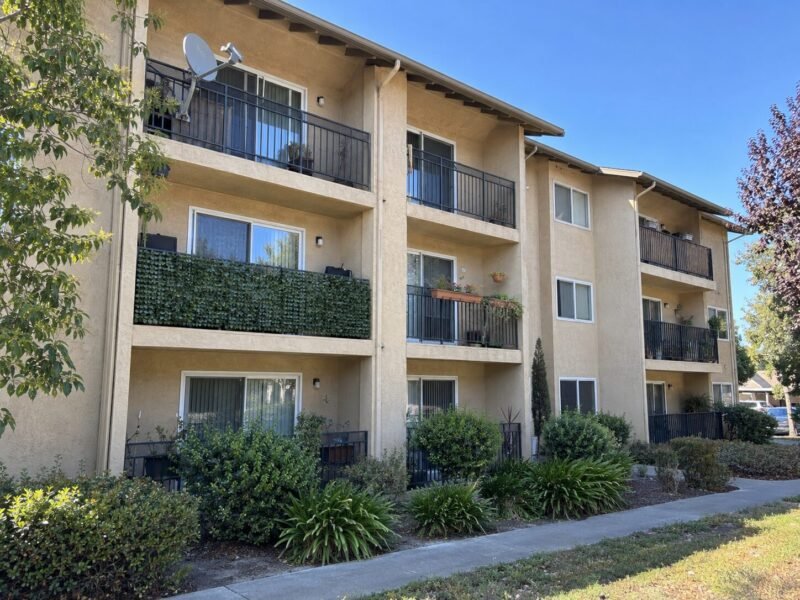
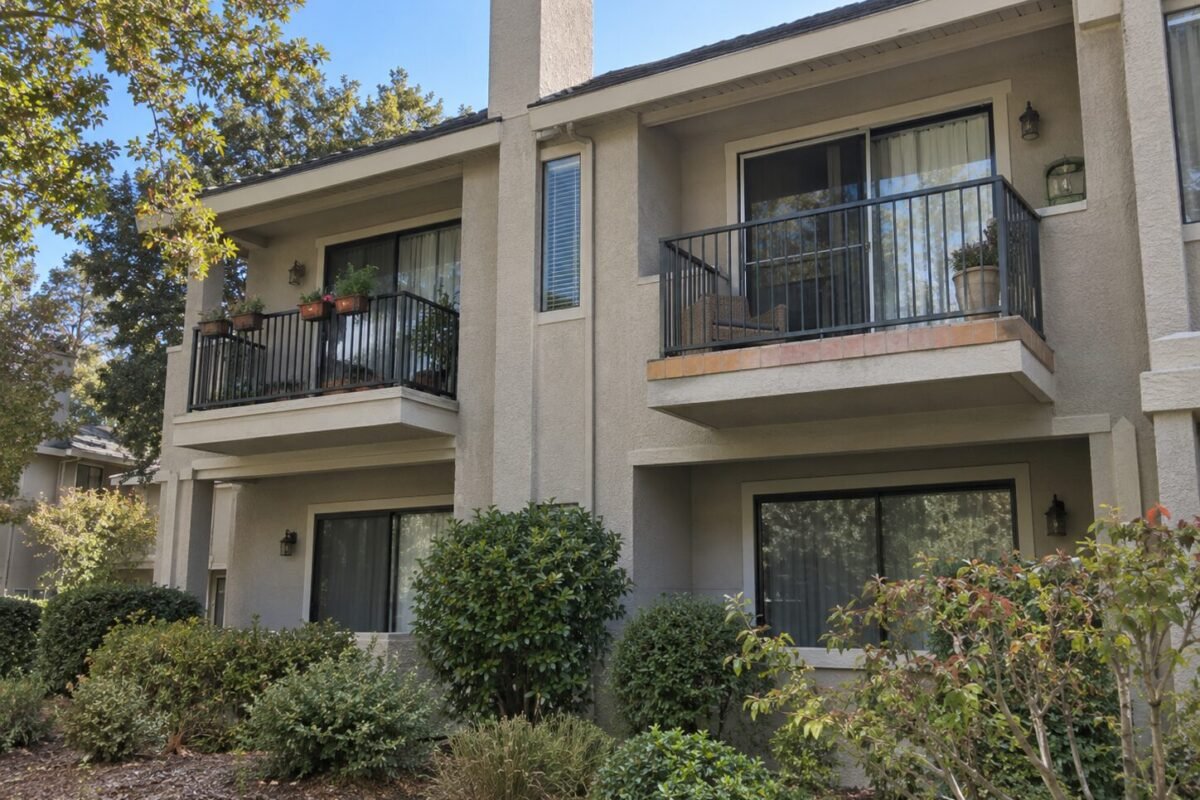
Scope came first. Twenty-four units across three two-storey buildings: the twelve upper units have balconies more than six feet above grade, the twelve ground-floor units have patios at grade. Patios at grade are outside the statute, so the inspection covered fifteen elements — twelve balconies and three stairways — not twenty-four.
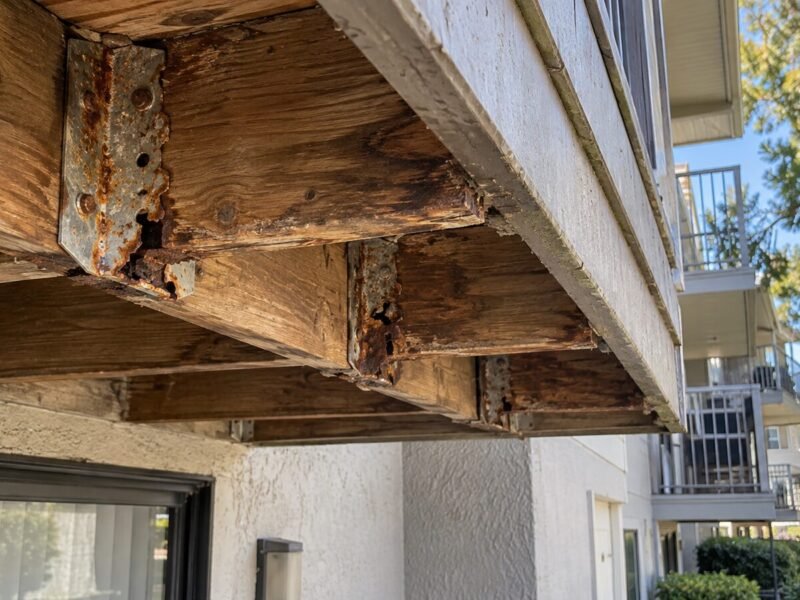
Three balconies had failures. One was a straightforward membrane failure at the outboard edge, which is association work by any reading. The other two were not: on one, an owner had laid tile over the deck coating and trapped water beneath it; on the other, a row of bolted planter brackets had put six unflashed penetrations through the membrane. Under Civil Code §5551 the association funds the inspection and the load-bearing components, but allocation of damage caused by owner alterations depends on the recorded declaration — which is why our SB 326 reports label each deficiency by element type and failure mechanism.
The Solution
The survey ran the way any balcony inspection does — every element assessed visually, with openings cut on a sample the engineer selected — and the report was written for a board rather than for an engineer. Each deficiency carried an element type, a photographed failure mechanism, and a note on when the damage started, which is what the association's counsel needed to allocate cost defensibly.
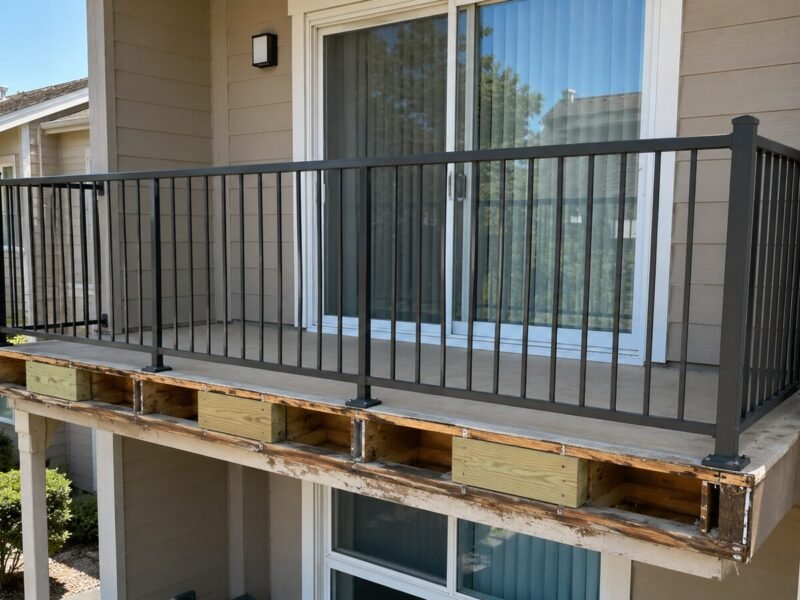
The association funded the membrane replacement on all three balconies and the ledger repair on the one with structural damage, because framing and waterproofing are association components. The two owners paid to have the tile and the planter brackets removed and the penetrations properly closed. Nobody went to arbitration, and the whole thing was settled at one board meeting.
- Engineer-led HOA balcony inspection of 15 elements
- CC&R review before scoping, to frame the repair allocation
- Confirmation that 12 at-grade patios fall outside the statute
- Invasive sample openings selected by the engineer
- Findings labelled by element type & failure mechanism
- Membrane replacement on 3 balconies & 1 ledger repair
- Stamped report for the board, the membership and the reserve study
How the Project Ran
-
Board consultation (Week 1)
Elements counted, CC&Rs reviewed, and the scope confirmed — including which structures fall outside SB 326 and therefore outside the quote.
-
Inspection (2 days)
All twelve balconies and three stairways assessed and photographed, with moisture readings at each ledger and openings cut on the engineer's sample.
-
Report & allocation (Week 3)
Stamped report issued with every deficiency labelled by element type and failure mechanism, so the board could map findings straight onto the declaration.
-
Repairs (5 working days)
Membranes replaced on three balconies and one ledger repaired under the association's scope; owner-installed tile and planter brackets removed and the penetrations closed under the owners'.
Materials Used
- Westcoat ALX system membrane replacement on the three affected balconies
- Pressure-treated Douglas fir ledger repair on the balcony with structural damage
- Sheet-metal flashing outboard edge and ledger detail
- Polyurethane sealant closure of the owner-installed bracket penetrations
Before & After
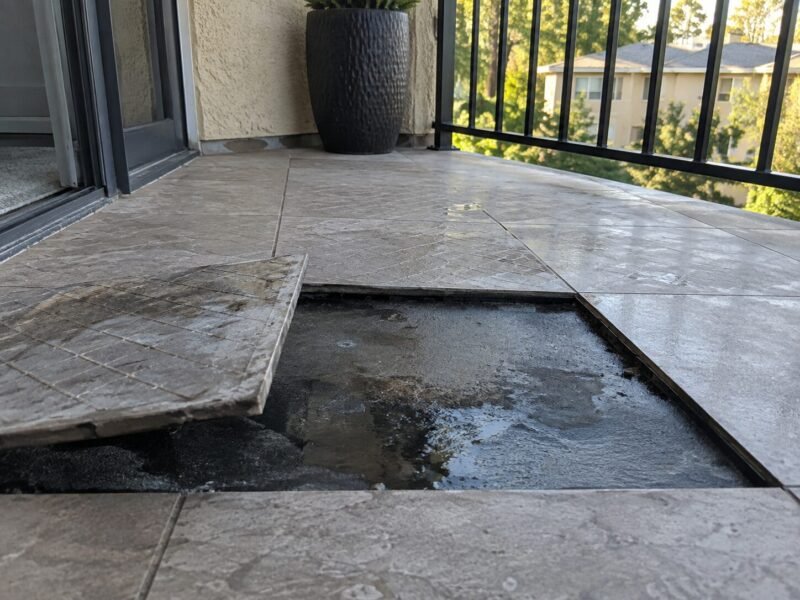
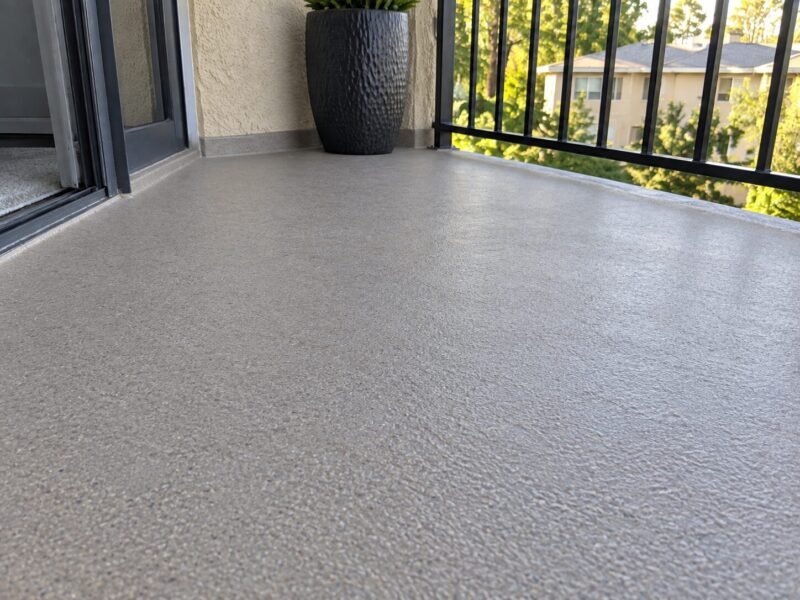
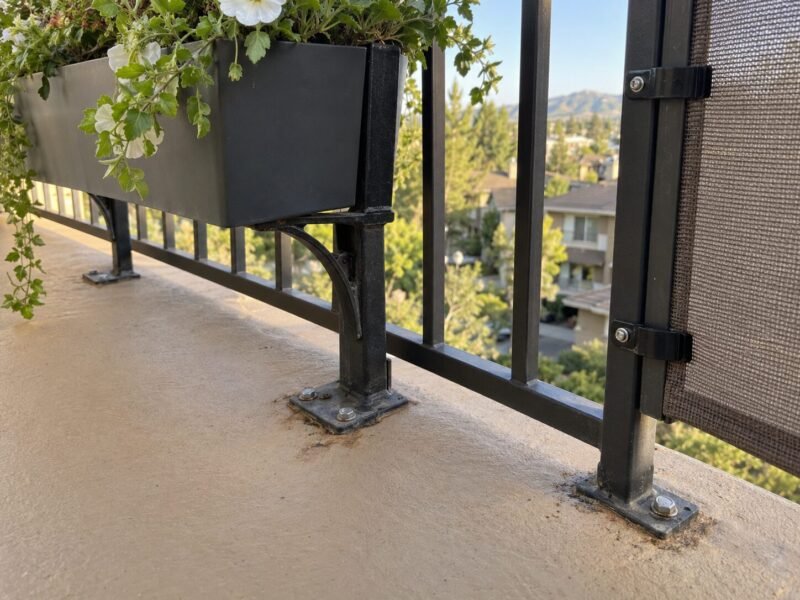
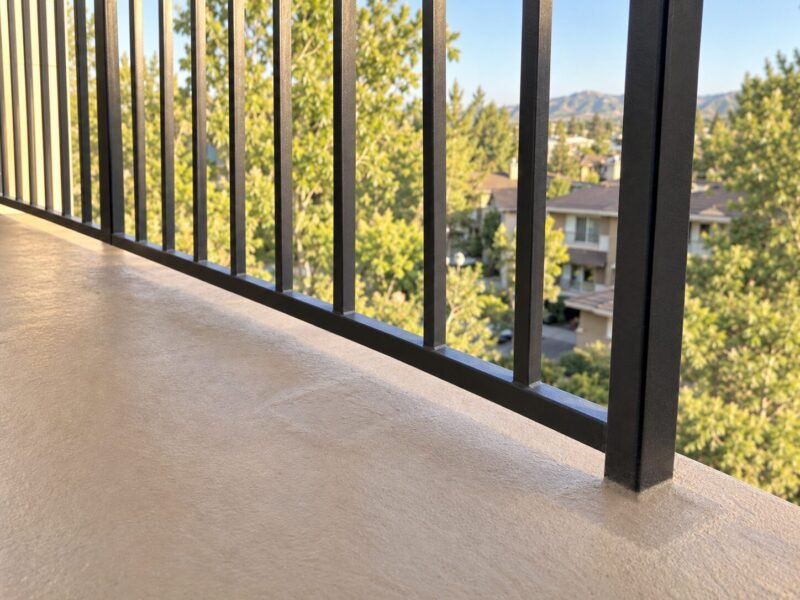
Three balconies repaired and every finding allocated in writing — settled at one board meeting.
We had tabled this twice because nobody could tell us who would be paying. The report split it line by line, and the two owners involved accepted it without an argument.
Questions About This Project
Does the association pay, or does the owner?
The recorded declaration governs, but the pattern is consistent: structural framing, waterproofing, guardrails and the attachment to the building are association components even on an exclusive-use balcony. Owner-installed finishes, planters and alterations — and damage caused by them — generally fall to the owner. A report that labels each finding by element type is what lets a board apply that split without guessing.
Do ground-floor patios need inspecting?
Not under SB 326. The statute covers elevated elements more than six feet above ground with wood or wood-based structural support. A patio at grade does not qualify, and you should not be paying to have it inspected — on this project that removed twelve of twenty-four units from the scope.
What should a board have ready before the first site visit?
The CC&Rs, the reserve study, any prior inspection or repair records, and a current owner contact list for access notices. The documents matter more than people expect: they decide how the findings get allocated, and reading them afterwards is how allocation turns into a dispute.