Project Overview
- Service Type
- SB 326 Inspection · Structural Repair · Waterproofing
- Location
- Lincoln, CA
- Property Type
- Active adult (55+) condominium community — 96 units, 8 buildings, built 1996
- Timeline
- 5-day inspection · repairs phased across two budget years
- Completed
- August 2026 (Phase 2)
Project at a Glance
The Problem
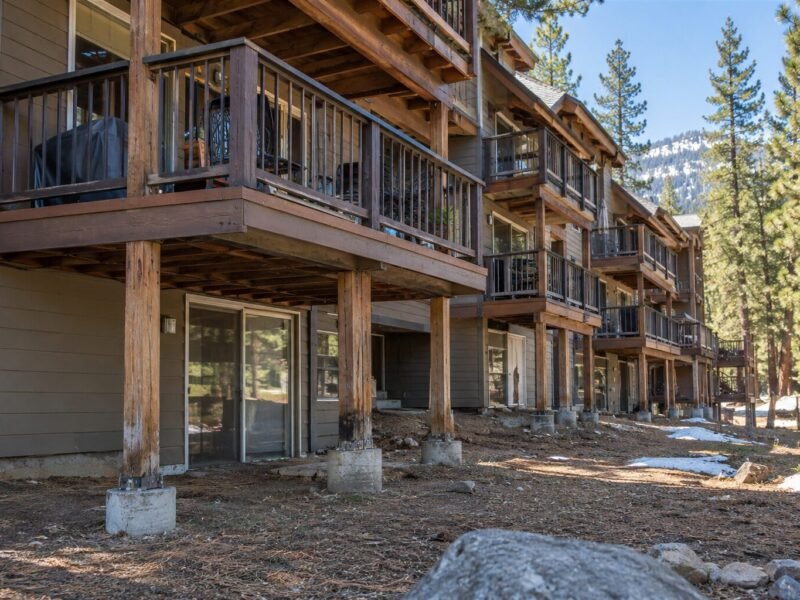
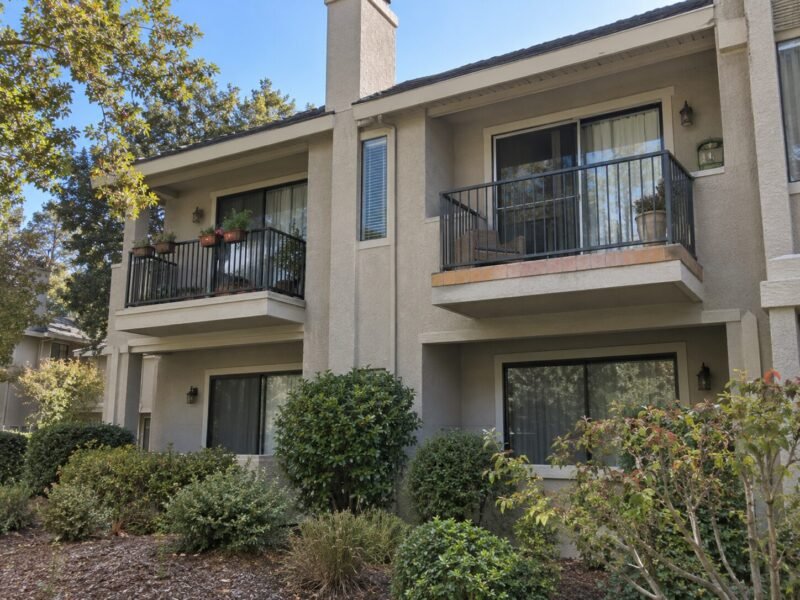
The community was built in 1996 and had never had a structural inspection. The guards are painted steel on wood blocking, and from the walkway everything looked maintained — repainted on schedule, nothing visibly loose.
The load checks said otherwise. On twenty-six balconies the posts moved under hand pressure, not because the steel had failed but because the wood blocking they were bolted into had softened around the fastener penetrations. On four of those, the movement was enough that the guard could not be relied on to hold its design load. Four more had baluster spacing wider than the current 4-inch sphere limit, a legacy of the original build.
Under Civil Code §5551 the inspecting engineer must report any condition posing an immediate threat to the association and the local enforcement agency within 15 days, and the association must restrict access until it is corrected. Four balconies met that bar and were closed that week. The other twenty-two were deteriorated but not an immediate threat — which is exactly where a board has real choices to make. Our SB 326 inspection service delivers the certified report and a scope a board can actually budget against.
The Solution
We wrote the scope so it could be split. The four immediate-threat balconies were repaired within three weeks of the report. The remaining twenty-two were condition-ranked, priced as a discrete reserve component, and approved by the board for the following fiscal year — from reserves, with no special assessment.
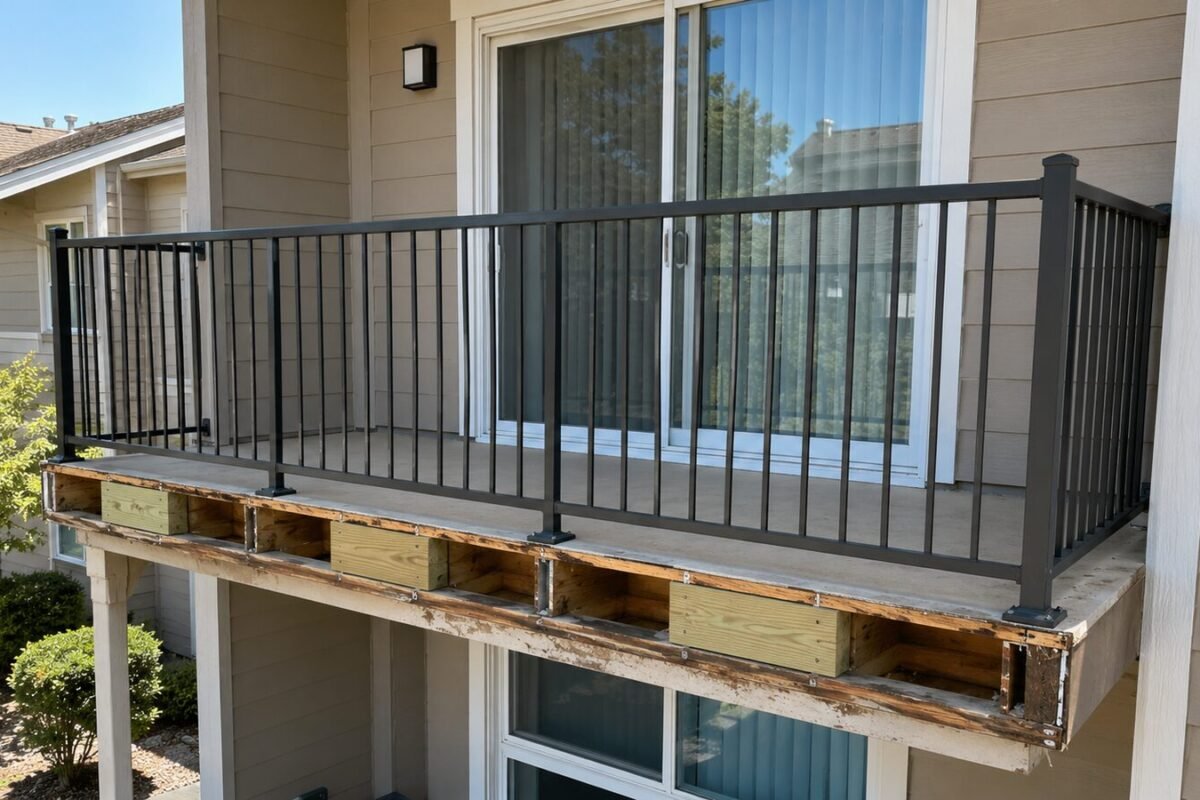
Every repair followed the same detail: guards and posts removed, decayed blocking cut out and replaced in pressure-treated material, posts re-set on stainless base anchors with butyl tape and sheet metal concealed over each penetration, and the perimeter membrane rebuilt into the existing field coating. Where spacing was non-compliant the board elected to add infill while the guard was already apart. Phase 2 ran in spring, deliberately ahead of the summer heat.
- Engineer-led SB 326 inspection of 96 balconies
- Individual load checks on every guard
- 15-day immediate-threat notice & closure on 4 balconies
- Post blocking replacement & stainless base anchors
- Flashed post penetrations & perimeter membrane tie-in
- Guard infill to a 4-inch maximum sphere where elected
- Scope priced by budget year for reserve planning
How the Project Ran
-
Inspection & load checks (5 days)
All 96 balconies assessed with moisture readings and individual guard load checks; twenty-six failed, four of them at immediate-threat level.
-
Notice & Phase 1 (Weeks 1–6)
Four balconies reported to the association and Placer County enforcement inside the statutory window and closed off; all four repaired within three weeks of the report.
-
Board planning (Months 2–4)
The remaining twenty-two condition-ranked and priced as a standalone reserve component, in a form the board could approve in its next budget cycle.
-
Phase 2 & certification (14 months from report)
Twenty-two balconies completed in spring ahead of the summer heat; engineer's certified report and photo file issued for the nine-year cycle.
Materials Used
- Pressure-treated Douglas fir guard post blocking at the deck perimeter
- Stainless steel base anchors post-to-blocking connections
- Butyl flashing tape & sheet metal concealed protection at every post penetration
- Westcoat ALX system perimeter membrane and tie-in to the existing field coating
Before & After
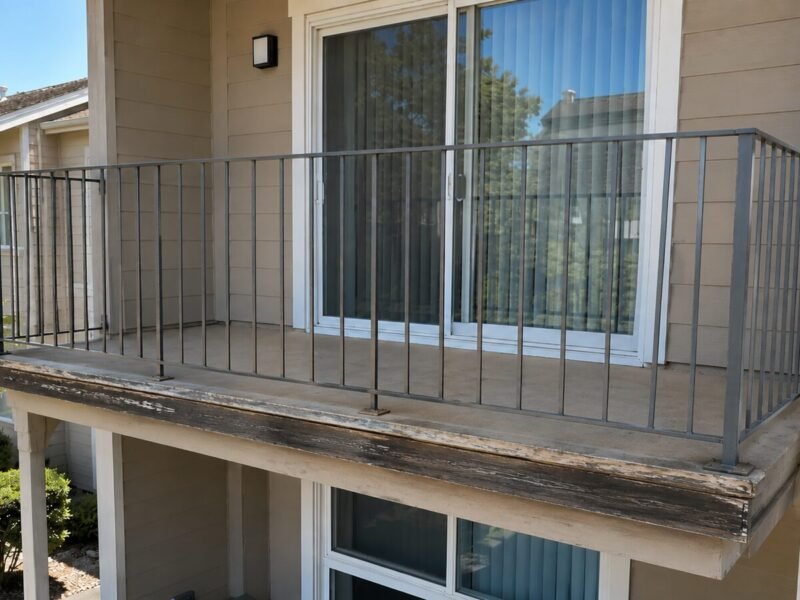
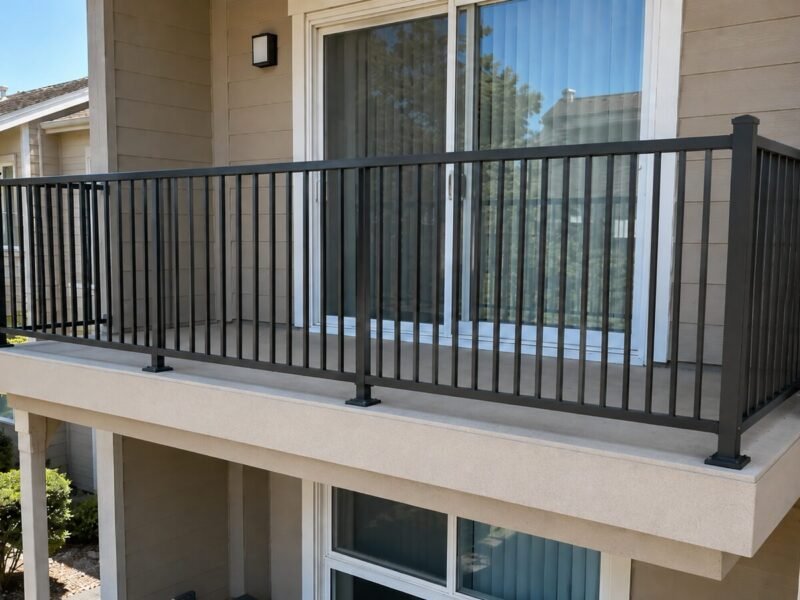
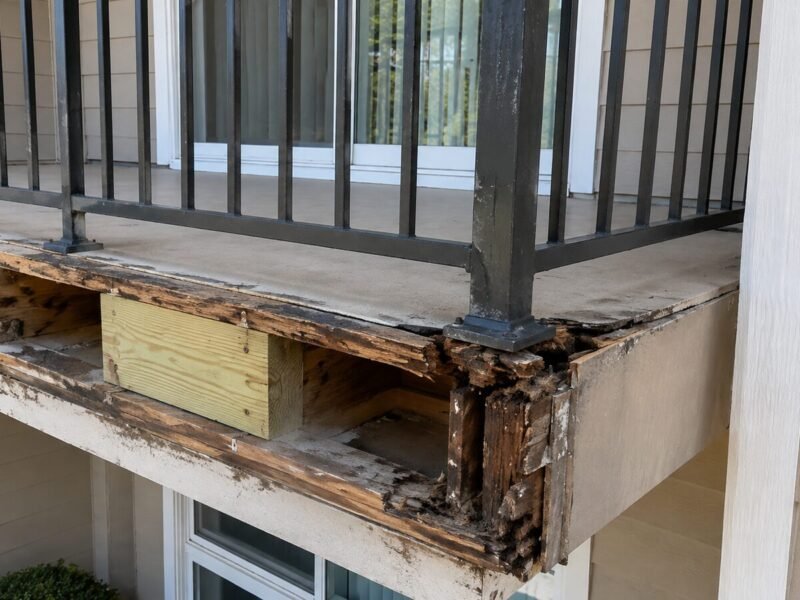
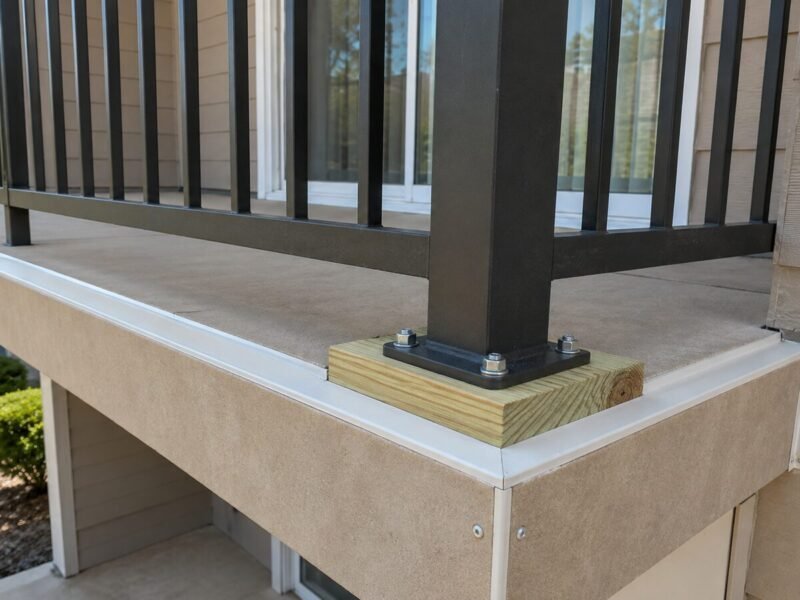
Twenty-six guards rebuilt across two budget years — funded from reserves, with no special assessment.
We are a fixed-income community. Being told which four had to happen this month and which twenty-two could wait for the next budget is what made this survivable for us.
Questions About This Project
Does everything in the report have to be fixed at once?
No. Only conditions the engineer identifies as an immediate threat require access restriction and prompt correction. Everything else is prioritised by condition, and a board can phase it across budget years — which is precisely why SB 326 ties the inspection to the reserve study.
Do older railings have to be brought up to current code?
Not automatically. What SB 326 assesses is safe condition and load capacity, not conformity with the current code in every dimension. Baluster spacing from an earlier code is not itself a violation — but many boards correct it while the guard is already apart, since the labour is already being paid for.
Who pays — the association or the individual owner?
For exclusive-use common area balconies, Civil Code §4775 places repair and replacement of the load-bearing components and their associated waterproofing with the association. Governing documents can allocate maintenance differently, so the board should read them alongside the report before committing funds.