Project Overview
- Service Type
- SB 326 Inspection · Waterproofing
- Location
- Woodland, CA
- Property Type
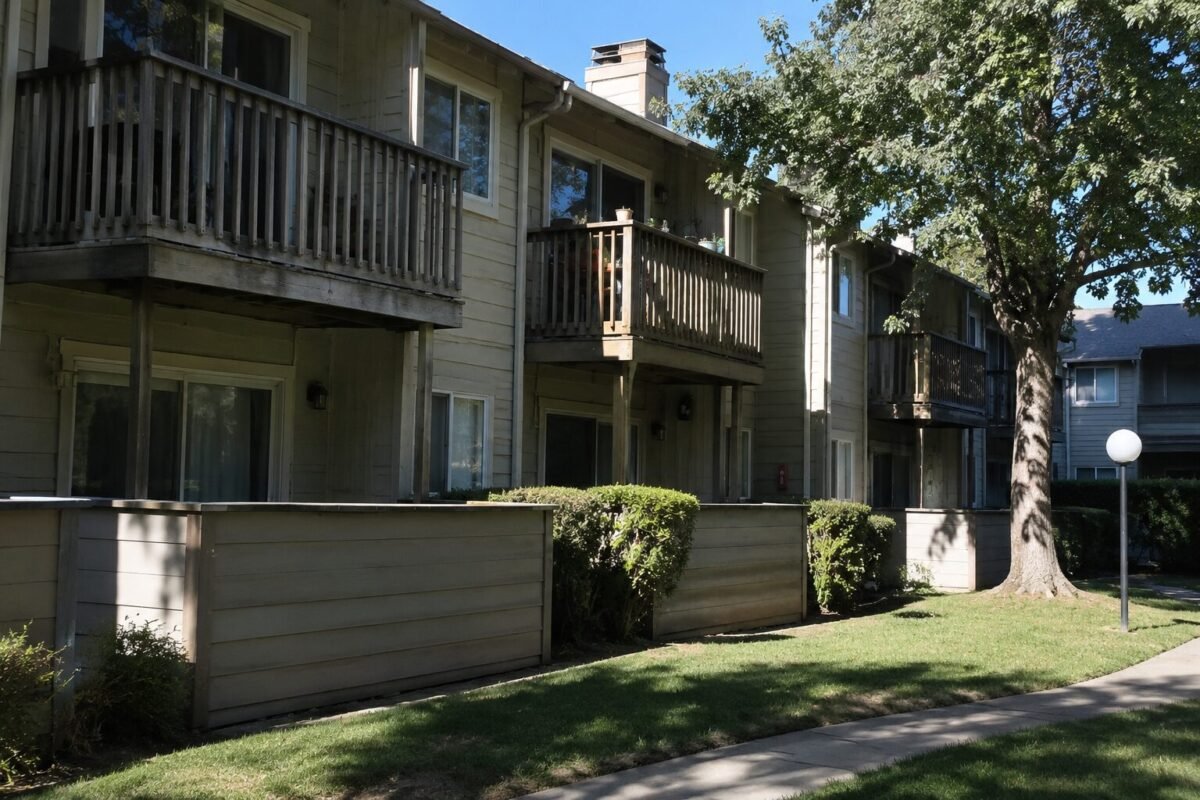
- Townhome-style condominium association (54 units, 9 buildings)
- Timeline
- 3-day inspection · 6 working days repairs · 19 days total
- Completed
- March 2026
Project at a Glance
The Problem
The board had put the inspection off for a year. Then the association's carrier issued a conditional non-renewal: produce a completed structural inspection of the exterior elevated elements, or coverage lapses at the end of the term. Five weeks.
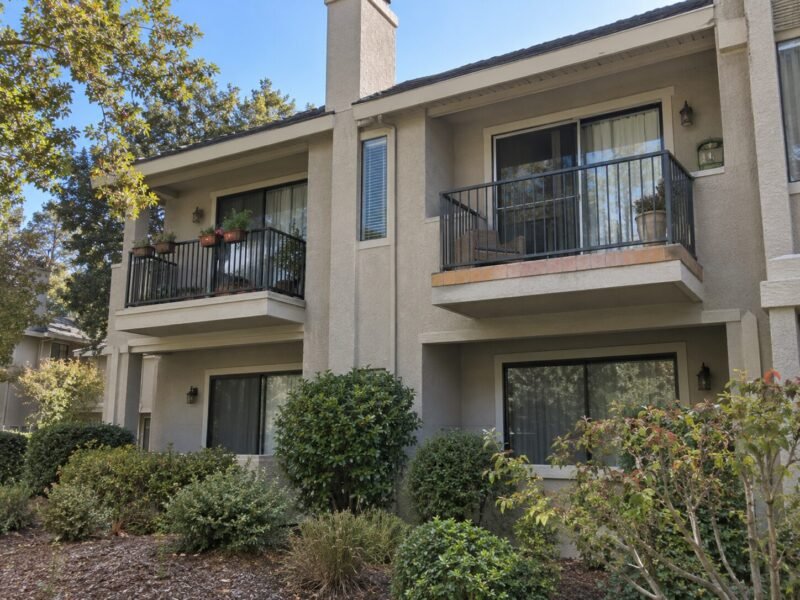
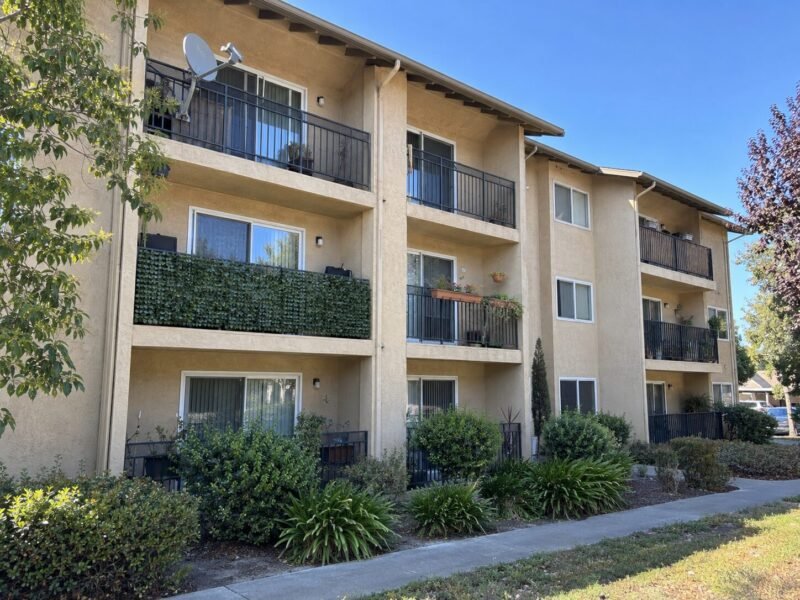
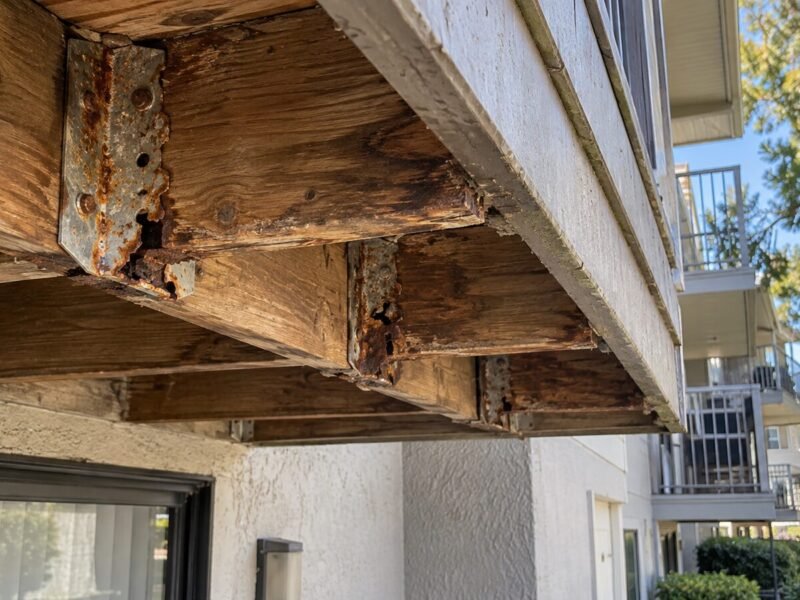
The buildings were in reasonable shape. What the survey found was ordinary and fixable — chalked coatings on seven balconies, two scuppers discharging onto the framing instead of clear of it, sealant at the end of its life at eleven guard post bases, and one landing with elevated moisture at the ledger.
Under Civil Code §5551 the report must be signed by a licensed structural engineer or architect and based on a random, statistically significant sample sized so findings can be projected across the population with 95% confidence — and it becomes part of the association's reserve study. Carriers now ask for that document by name. Our SB 326 inspection service produces it, and handles anything the report turns up.
The Solution
We scheduled the inspection for the following week and ran it in three days: all 54 elements assessed, six exploratory openings cut, and moisture logged over the weekend at the landing that read high.
The findings were small enough to close out immediately, so we did — seven balconies recoated, scupper extensions fitted and re-flashed, post bases re-sealed, and one landing ledger repaired and re-waterproofed. The certified report went to the board and to the underwriter with every finding already shown as complete, which is a materially different document from a report with an open list attached.
- Engineer-led SB 326 inspection of 54 balconies, walkways & landings
- Six exploratory openings with three-day moisture logging
- Coating replacement on 7 balconies
- Scupper extension & flashing correction
- Guard post base re-sealing
- Ledger repair at one landing
- Certified report issued to the board and the carrier
How the Project Ran
-
Intake & scheduling (Days 1–4)
The carrier's wording reviewed against §5551, scope confirmed with the board, and the inspection booked for the following week.
-
Inspection (Days 5–7)
All 54 elements assessed and photographed; six openings cut; moisture logged over three days at the landing showing elevated readings.
-
Repairs (Days 8–15)
Seven coatings replaced, scuppers extended and re-flashed, post bases re-sealed, and the landing ledger repaired and re-waterproofed.
-
Certified report (Days 16–19)
Engineer's report issued with all findings shown as closed, delivered to the board and forwarded to the underwriter ahead of the renewal date.
Materials Used
- Westcoat ALX system recoat of the seven flagged balconies
- Galvanized scupper extensions discharge carried clear of the framing
- Polyurethane sealant guard post base and penetration detail
- Pressure-treated Douglas fir ledger repair at the landing
Before & After
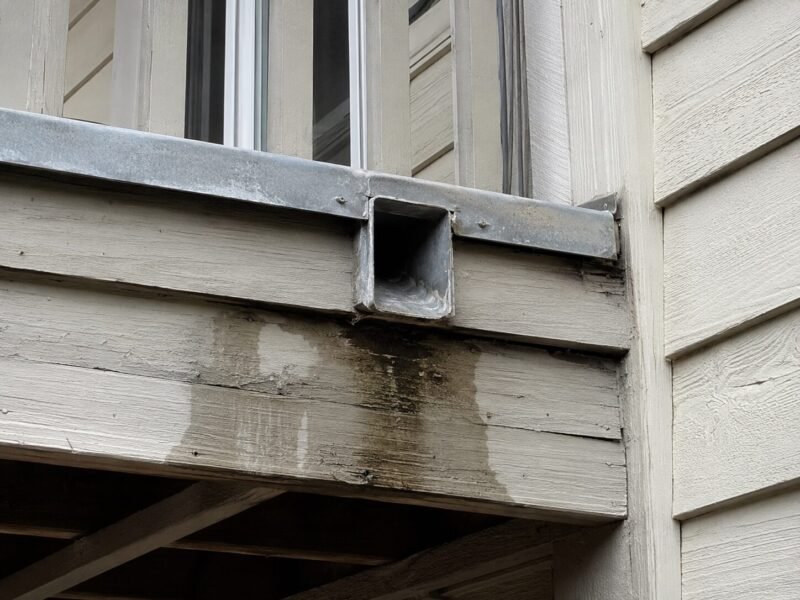
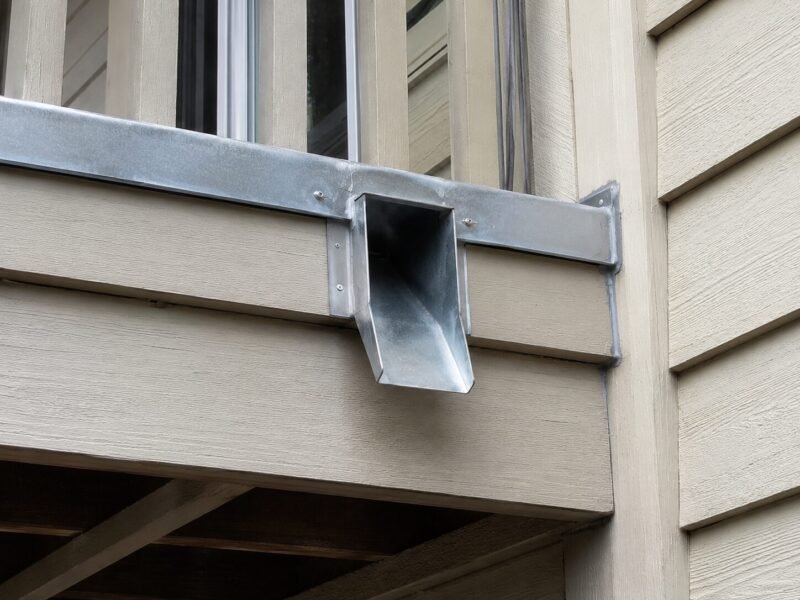
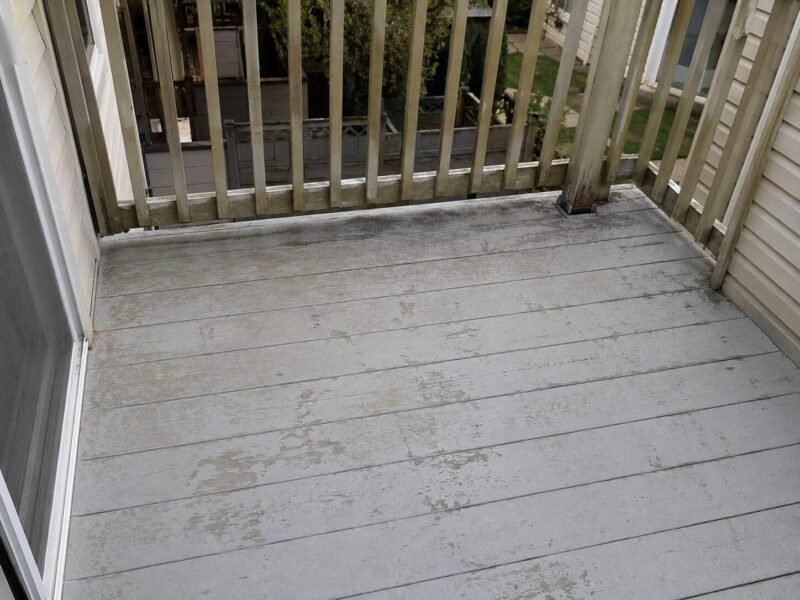
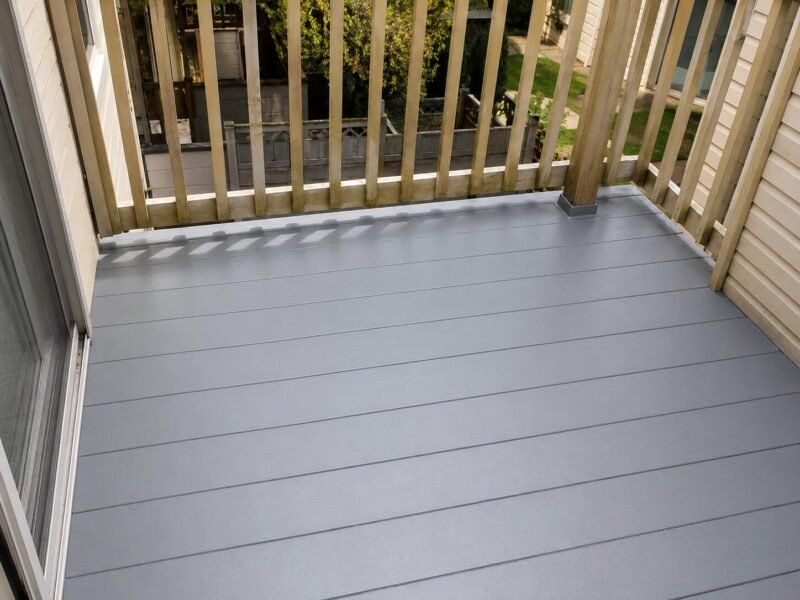
Certified report delivered on day nineteen — the policy renewed without a lapse in coverage.
We had five weeks and no inspection. What satisfied the underwriter was not the report on its own — it was the report with the repairs already closed out.
Questions About This Project
Our carrier wants a structural inspection. Is that the same as SB 326?
For a California condominium association, usually yes: what underwriters are asking for is a signed inspection of the exterior elevated elements by a structural engineer or architect. The §5551 report satisfies that, and you are required to have one regardless. Confirm the exact wording with your broker before commissioning anything separate.
How fast can an inspection be done?
The inspection itself takes days, not weeks. What sets the timeline is scheduling, the size of the sample, and whether anything found needs correcting before the report can be issued clean. Nineteen days from first call to certified report is realistic when the findings are minor.
What if the report finds something major right before renewal?
Then you disclose it with a repair scope and a schedule attached. Underwriters respond far better to a dated plan than to an open finding — and withholding it is not an option, since the report becomes part of the association's permanent records.