Despite its name, dry rot is caused by moisture. A fungus breaks down the wood fibers that give framing its strength, leaving material that can look solid on the surface but crumbles under load. On balconies and decks, it is the hidden threat that turns a small leak into a structural failure.
Why it stays hidden
Because it grows inside enclosed assemblies — between the deck surface and the framing, or where the balcony ties into the wall — dry rot is often invisible during a casual look. By the time it shows on the surface, the damage beneath is usually far more advanced than a property owner would guess.
The moisture connection
This is exactly why California’s compliance laws emphasize load-bearing components and waterproofing together. Stopping water intrusion stops the conditions dry rot needs to spread. Wherever a membrane has failed, a flashing has lifted, or water pools without draining, the wood beneath is at risk.
- Failed or cracked waterproof coatings
- Missing or lifted flashing at wall connections
- Standing water and blocked drainage
- Gaps at railing posts and penetrations
What repair looks like
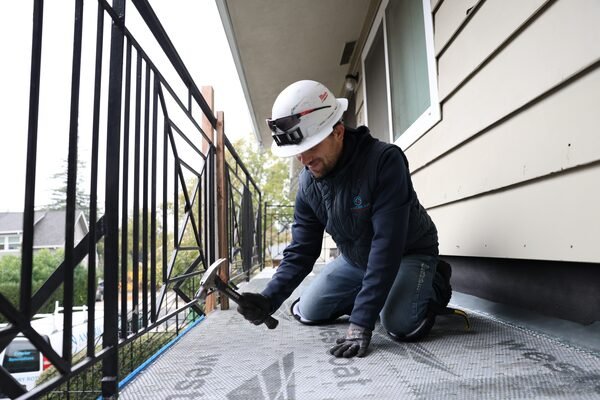
When an inspection finds dry rot, the affected framing typically must be removed and replaced, and the waterproofing rebuilt from the substrate up. Early detection keeps that scope — and the cost — contained. Catch it while it’s a few boards, and the repair is manageable; ignore it, and the same problem can compromise an entire balcony assembly.